BRUSHSTROKES & FAULTLINES
Vol. 8, April 2026
42nd Street to West End
Theatre & Political Theatre
In this issue, Brushstrokes & Faultlines turns toward the stage not as an escape from public life, but as one of its clearest mirrors. Here, musicals, spectacle, satire, villainy, longing, statecraft, and grief all share the same boards. What looks like performance often proves to be confession. What looks like entertainment often turns out to be power in costume.
OVERTURE
Letter from the Editor
A curtain speech for an age of overacting: theatre as revelation, politics as choreography, and public life under the lights.
ACT I: ENTER THE CHORUS
Oh, What a Beautiful Mornin’
A bright opening shadowed by dread, where innocence, appetite, and menace begin to share the same stage.
Feature Review: Carousel
A return to one of musical theatre’s most uneasy inheritances, where tenderness and cruelty occupy the same song.
INTERLUDE I
Send in the Clowns
A brief reflection on belatedness, embarrassment, and the terrible comedy of a performance already gone wrong.
Essay: Little Shop of Horrors
A dark satire on MAGA as carnivorous spectacle, fed by grievance, outrage, and applause.
Essay: Seasons of Hate
A Rent-inflected meditation on grievance culture, ideological exhaustion, and a society that measures itself in rage.
ACT II: COSTUME CHANGES
Before the Broomstick
A return to Gregory Maguire’s Wicked as a study in power, myth, moral distortion, and the making of monstrosity.
INTERLUDE II
No One Mourns the Wicked
A meditation on villainy, sanctioned storytelling, and the politics of who is remembered only to be condemned.
Essay: The Ladies Who Lunch
On politicians’ wives, public composure, loneliness, and the private cost of life seated beside power.
Essay: Wicked Little Town
A study of military and government takeovers as theatre: costume, slogans, choreography, and fear.
ACT III: SPECTACLE & AFTERMATH
Spectacular, Spectacular
A return to Moulin Rouge as visual excess, doomed performance, and the strange sincerity of extravagance.
INTERLUDE III
Prayer
A quiet turn inward on supplication, survival, and the need to speak softly in a world that rewards noise.
REFLECTIONS IN VERSE
New Ways to Dream
A lyric mash-up in verse on reinvention, ruin, fantasy, and the voice that remains after the curtain falls.
CURTAIN CALL
Closing Note
The applause fades, the costumes are returned, and the house empties—but the questions remain.
Letter from the Editor
There is a moment at the beginning of The Phantom of the Opera that has never quite left me. The stage is not yet alive in the way we think of theatre at its fullest. It is dust and aftermath, auction and residue, the remnants of something grand reduced to objects and memory. And then, almost all at once, the past surges forward. The set rearranges itself. Time refuses to stay buried. What looked finished reveals that it was only waiting for its cue.
I have often thought that theatre begins there, in that refusal.
The past is never really past. Not in art. Not in politics. Not in the life of a people. The costumes change, the lighting changes, the language sharpens or softens with the season, but the old struggles find their marks again and again. Beauty returns. Fear returns. Censorship returns. So do courage, longing, wit, defiance, and the strange human need to gather in a room and witness something together.
That is where this issue begins.
This month, as Brushstrokes & Faultlines turns toward theatre and political theatre, I find myself thinking less about Broadway as a destination than about the stage as a sanctuary. A real one. Not perfect, not untouched by vanity, money, cruelty, or exclusion, but still a place where people of different faiths, convictions, histories, and heartbreaks can sit close enough to hear one another breathe. A place where strangers laugh together, cry together, hold their silence together. A place where hope and dream and grief are not abstract ideals but living things, spoken aloud under lights.
I have believed in that power for most of my life.
One of my earliest memories is from preschool, when I played a role guarding a bridge. I do not remember the name of the production. I do not remember the lines. What I remember is the feeling, that old and irresistible theatrical promise that for a little while you could step into a role and become someone else. Anyone who has loved the theatre knows that feeling. The farther we step into a part, the farther away we can get, however briefly, from the horrors of real life. Not because theatre denies reality, but because it gives us another way to endure it. Another language for it. Another arrangement of sound and light and human presence that makes life feel not smaller, but more survivable.
I have always believed the stage is just waiting for the next Callas, the next Chopin, the next comedian. Through all conflicts, stages have remained the ever-present reminder that the human mind is capable of beauty and art.
That belief matters to me even more now because what frightens me is not merely that public life has become theatrical, though it plainly has. We live in an era of gesture without substance, of spectacle mistaken for leadership, of people performing certainty while economies strain, wars widen, and the truth is treated like a prop that can be moved offstage when it becomes inconvenient. We know this kind of theatre well by now: the dramatic pause, the villain’s point, the flag as scenery, the outrage cue, the manufactured applause. Politics has always involved performance, but ours has grown especially vulgar in its ambitions. It does not simply seek to persuade. It seeks to dominate the stage, flatten the cast, and rewrite the script so thoroughly that dissent itself appears out of character.
But that is only one part of the danger.
What frightens me now is that institutions are coming under attack from wars, censorship, and dictators who think they can program even the stage.
The threat is not only that politics behaves theatrically. It is that theatre itself comes under threat from politics, domestic and abroad. We see it in censorship campaigns, in ideological pressure, in the policing of language, in the fear directed at LGBTQ artists and audiences, in the suspicion cast upon spaces where human beings are allowed to become more than one thing at once. The stage has always unsettled authoritarians for the same reason it has so often saved the rest of us: it invites transformation. It resists a single approved identity. It teaches audiences to imagine otherwise.
And there are many in public life now who have no patience for that kind of freedom.
They would like the stage programmed, obedient, narrowed. They would like art that affirms power rather than interrogates it. They would like stories without queerness, satire without teeth, memory without critique, spectacle without consequence. They are comfortable with performance when it rallies a crowd, sells a slogan, or sanctifies a hierarchy. They are less comfortable when performance rearranges the insides of a listener, when a soprano’s high note cracks open the chest, when a symphony leaves the audience altered, when a play makes people feel too much at once to go back easily to the world as they found it.
That is the kind of stage I choose.
A campaign can preach from a stage, or someone can give a momentous performance of Bellini. I choose to look at stages where the performance might rearrange my insides, not the kind of performance that attempts to rearrange the world.
That distinction lives at the center of this issue. We are interested here not only in plays and musicals, but in the ways societies cast heroes and villains, wives and monsters, patriots and outsiders. We are interested in costume changes, in moral scripting, in the machinery by which public life assigns roles and punishes those who refuse them. We are interested in the difference between genuine political theatre, which can expose power, and political life that has become so theatrically manipulative it begins to devour truth itself.
The essays and reviews in this issue move through satire, spectacle, memory, appetite, myth, propaganda, and song. They move through the old Broadway promise and the harsher modern knowledge that no stage exists outside history. Even so, I did not want this issue to become an exercise in nostalgia. Nostalgia is too easy, and too often dishonest. It lets us adore the glitter while overlooking the architecture that held it in place. Better, I think, to love the theatre critically: to admire its beauty, question its exclusions, defend its freedom, and understand how much is at stake when the lights come up.
And yet, I still return because I feel drawn to the sound, the light, the sense of belonging in an audience where everyone, no matter their walk of life, is together, for the same reason, in the same moment.
That remains one of the great democratic miracles of the arts. Not perfection. Not agreement. Presence. Shared attention. A temporary congregation of people consenting to be moved. In a culture that increasingly rewards fragmentation, suspicion, and ideological rehearsal, there is something quietly radical about that. To sit in the dark beside strangers and feel a room altered by voice, story, timing, and breath is no small thing. It may be one of the last places many of us remember how to belong to one another without first having to win.
So let this issue open there: not with easy reverence, but with alert devotion. With gratitude for the stage and concern for what gathers around it. With love for the sanctuary and an unblinking look at the forces that would reduce it to decoration, discipline, or doctrine.
The set is already shifting. The scenery is already moving into place. The chorus has taken its marks. The villains know their lines. So, I think, do the rest of us.
Curtain up.
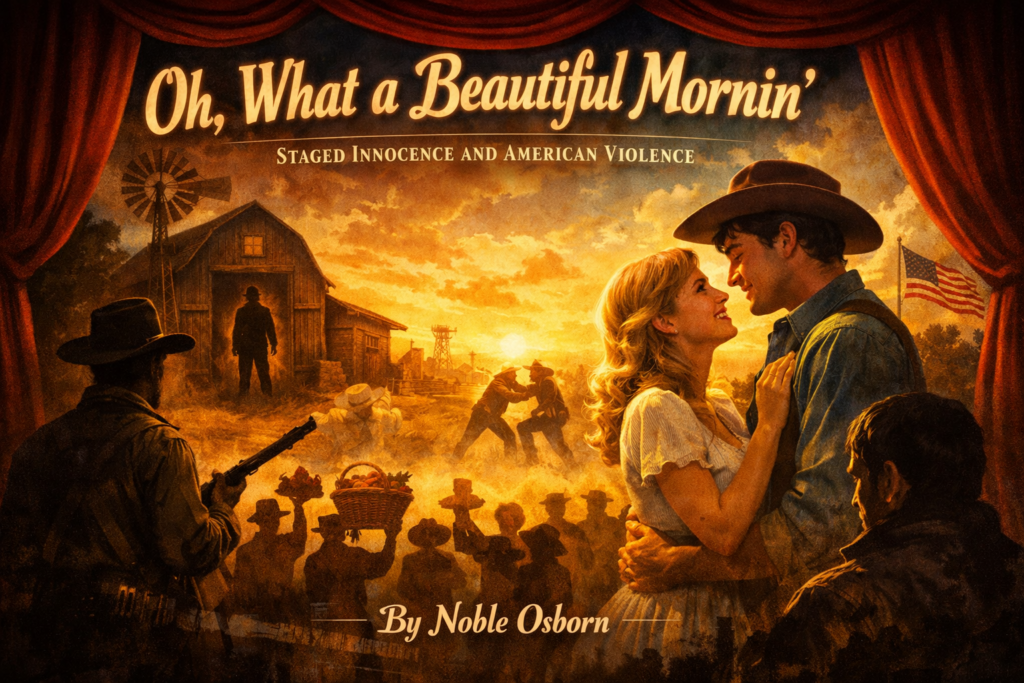
Oh, What a Beautiful Mornin’
On Oklahoma!, staged innocence, and the American habit of singing past its own violence
It begins, as so many American fantasies do, with a sunrise.
Not with blood, though blood will come. Not with fear, though fear is already in the room. Not with the law, though the law is always waiting just offstage to ratify whatever the community has already decided to forgive. It begins with brightness, with a voice lifting into open air, with the promise that the world before us will be legible, tuneful, and, above all, kind. The stage opens onto appetite and innocence alike: land to be loved, girls to be courted, food to be admired, futures to be claimed. The dream is not simply that life might be beautiful. The dream is that beauty itself might be moral proof.
That is part of what makes Oklahoma! so enduring, and so dangerous.
It remains one of the most seductive machines ever built for turning contradiction into comfort. It sings of community and sells belonging; it presents flirtation as a civic language, competition as courtship, and violence as an unfortunate disturbance in an otherwise healthy order. It offers audiences a glowing national self-portrait: fresh-faced, romantic, expansive, certain of its own decency. Yet beneath that brightness sits something harder and older—a culture already practiced in deciding whose desire is charming, whose hunger is embarrassing, whose roughness can be excused, and whose loneliness must be marked as menace.
This is not a matter of discovering darkness in an otherwise innocent text, as though a stain had appeared later. The darkness is part of the design. Oklahoma! is so revealing not because it fails to hide its violence, but because it teaches us how violence can be absorbed into nostalgia and returned to us as something wholesome. It shows how easily a chorus can sound like harmony when it is really enforcement, how quickly romance can become territorial, and how readily a community can call itself healthy while arranging one of its own as the necessary threat.
In other words, it does exactly what American myth has so often done: it puts on a beautiful face and asks us not to look too closely at the hands.
Many a New Day
The musical’s great trick is tonal. It enters not like tragedy, not even like satire, but like a pastoral invitation. Its world feels open. Air moves through it. Desire has the shape of teasing banter. The landscape is a moral one before it is even a physical one: broad skies, promising fields, a place where the self might be made clean and communal feeling can be trusted. Even those who have never seen the show know the atmosphere it manufactures. It is one of the most successful emotional products in American culture: the frontier as song, optimism as scenery, innocence as a public mood.
That mood matters because it softens everything that follows.
The musical does not ask whether courtship might be coercive; it asks us to accept coercion as one of courtship’s familiar idioms. It does not ask whether a community’s rituals are exclusionary; it presents ritual itself as proof of vitality. Appetite is everywhere in Oklahoma!—for food, for land, for beauty, for possession, for recognition—but appetite is not distributed equally. Some forms of wanting are charming. Others are vulgar. Some are permitted to sparkle in daylight. Others are forced into shadow, where they become evidence of bad character.
That division is not incidental. It is one of the show’s governing moral instincts. The audience is invited to laugh in places where it should perhaps recoil, to relax where it should perhaps become alert. The promise of the musical form—its buoyancy, its communal rhythm, its hunger for resolution—does not merely accompany the story. It disciplines our response to it. Song smooths. Ensemble reassures. Brightness arranges our sympathies before we have had time to examine them.
The result is a familiar national fantasy: a world that looks easier to understand than the one outside the theatre, precisely because it has already decided who deserves tenderness and who does not.
The Surrey with the Fringe on Top
Desire in Oklahoma! is rarely private. It is staged, advertised, bartered, overheard, laughed at, and made communal long before it is made intimate. Courtship is public business. Attraction arrives already dressed in performance. One flirts not simply to express feeling, but to establish position. Charm is social currency. Teasing becomes a kind of low-level warfare in which wit and status are as important as affection.
This is where the musical becomes especially sharp, though not always intentionally so. It understands that romance is never just romance inside a tightly policed community. It is spectacle. It is competition. It is a way of assigning value. To be wanted in the right way is to be affirmed publicly. To be wanted in the wrong way is to become vulnerable, ridiculous, or trapped.
The brilliance of the show’s surface is that it often presents these dynamics as playful. But playfulness can be an alibi. The line between flirtation and intimidation is not always drawn by the behavior itself, but by who has social permission to enact it. Confidence is read as charm in one man and threat in another. Persistence becomes romantic when backed by charisma, but alarming when carried by loneliness. The audience is taught, almost imperceptibly, to accept these distinctions as natural rather than ideological.
That is why the musical’s sweetness deserves suspicion. It is not false, exactly; it is selective. It knows how to frame behavior so that power looks effortless and possession looks like destiny. The surrey glitters. The joke lands. The audience relaxes. Meanwhile, desire has already been sorted into categories of acceptable and unacceptable hunger.
People Will Say We’re in Love
The title suggests intimacy, but the phrase itself is social. “People will say.” Even love, in this world, arrives pre-observed.
That may be one of the musical’s deepest truths. In tightly bound communities, romance is never merely a feeling between two people. It is a public script, and public scripts always come with rules. Who can touch whom, who may hesitate, who can mock, who must yield, who is allowed to take up space in desire without becoming grotesque—these things are not settled by emotion. They are settled by custom, by reputation, by the chorus murmuring at the edges of every private exchange.
What Oklahoma! understands, perhaps better than it intends to, is that innocence is often less a state of purity than a style of surveillance. Everyone knows everyone else’s business. The community watches, comments, nudges, approves, and contains. This can look warm, even funny, from the audience. It can sound like life. But the price of belonging is constant legibility. One must behave in ways the group can interpret, bless, and narrate back to itself.
That is why the musical’s romance never feels fully free. It is not unfolding in open country, no matter how wide the sky may look. It is unfolding in a social chamber. The community’s gaze is the real architecture of the piece. The lovers move within it. The jokes move within it. Even rebellion moves within it, because rebellion too is part of the drama by which the community proves its own resilience.
This is nostalgia at its most cunning. It teaches us to crave a world of shared ritual and mutual recognition while disguising the cost of living under such intimate collective judgment. It lets us feel warmed by communal life while forgetting how often communities survive by designating someone to absorb their unease.
Lonely Room
And there he is.
Every national myth requires its shadow figure, someone onto whom the surrounding brightness can project its anxieties. In Oklahoma!, loneliness is not simply a private wound; it is a theatrical condition. The isolated man becomes the repository for everything the community refuses to see in itself: resentment, sexual frustration, humiliation, roughness, incoherence, the failure to turn desire into acceptable style.
He is frightening, yes. But he is also useful.
What makes the figure so disturbing is not merely his volatility, but the way the show positions him as both person and symptom. He is treated as a problem to be managed rather than a life to be understood. His exclusion is half-acknowledged, half-rationalized. The community does not exactly create his menace, but it certainly helps shape the conditions under which menace curdles. Then, when the inevitable violence comes nearer, the same community can behave as though it has merely responded to danger rather than participating in its construction.
This is one of the oldest stories political cultures tell about themselves. A society marks certain people as unbeautiful, ungraceful, unassimilable. It withholds tenderness, then recoils from the hardened forms that deprivation can produce. It frames the resulting conflict as a moral contrast between the healthy body and its contaminant. And because the threatened order is usually dressed in familiar, sentimental symbols—home, love, decency, tradition—the audience is encouraged to accept its self-description.
Here Oklahoma! stops being only a musical and becomes a national instruction manual. It demonstrates how readily a culture can convert structural cruelty into personal failure, and personal failure into the justification for cleansing violence. Lonely men do not become symbols by accident. They are made into them by communities that need somewhere to place their dread.
The Farmer and the Cowman
The chorus in a musical is supposed to reassure us. It widens the sound. It tells us that the world of the play is bigger than private suffering and that individual conflict can be held inside a larger social rhythm. Even disagreement, once sung collectively, can appear survivable.
But choruses do not merely harmonize. They also consolidate.
In Oklahoma!, communal song is a political act before it is an aesthetic one. The group voice tells us not only how people feel, but what kind of society this is supposed to be: energetic, spirited, capable of containing tension without collapsing under it. Yet the more one listens, the more that communal confidence begins to feel like pressure. Harmony becomes less a natural expression of shared life than a demand that conflict be rendered manageable, picturesque, and finally obedient to the larger myth.
This is the genius—and the danger—of patriotic nostalgia. It does not erase conflict; it stages conflict in forms the nation can congratulate itself for surviving. It gives us the thrill of disorder and the relief of recontainment. It teaches us that social friction is proof of vitality so long as the right people remain centered and the wrong people can be pushed to the margins when the music swells.
The chorus warns, then, not because it sounds dissonant, but because it sounds so sure of itself. There is something chilling in any collective voice that knows in advance how the story ought to end. When communities sing too confidently about themselves, one should listen for who is being drowned out.
Oklahoma
What does the musical finally ask us to celebrate?
Not simply love, though love is the banner under which much of its emotional business is conducted. Not merely community, though community is the source of its sonic power. It asks us to celebrate resolution itself: the restoration of order, the cleansing of discomfort, the triumph of brightness over whatever threatened to complicate it. Its closing force lies in how completely it gathers the audience into that desire. We want the tension released. We want the public world made singable again. We want the stage to restore the confidence with which it greeted us.
And this, perhaps, is the deepest political lesson Oklahoma! has to teach. Nations adore endings that sound like an anthem. They crave narratives in which conflict has been clarified, danger isolated, belonging confirmed, and violence absorbed into the price of continuing. A beautiful final chorus can sanctify almost anything if the audience has already decided it wants to go home feeling restored.
That is why the musical still matters. Not because it is secretly wicked, nor because its pleasures are illegitimate, but because it reveals with unusual elegance how public innocence is produced. It shows how romance can help naturalize domination, how nostalgia can perfume brutality, how community can become an instrument of sorting and sanction while insisting on its own moral health. It shows, too, how much easier it is to sing about a beautiful morning than to ask what kind of night made it necessary.
There is real beauty in Oklahoma!. That should not be denied. But beauty is never the same as innocence, and certainly not the same as justice. The most enduring American spectacles have always known this. They do not survive by telling simple lies. They survive by wrapping difficult truths in forms so pleasurable we mistake our enjoyment for agreement.
The stage opens. The sun rises. The chorus enters. Everything seems easier to understand than the world outside.
Listen a little longer.
The warning is already in the music.
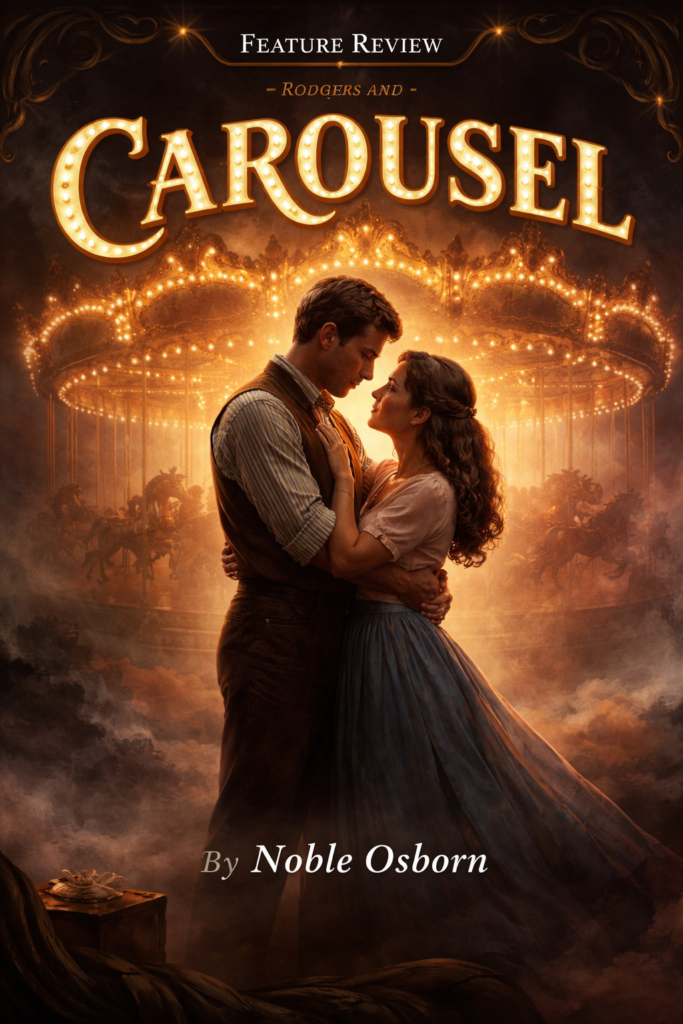
There are musicals one loves instinctively, and musicals one loves with caution. Carousel belongs to the second category. It is too beautiful to dismiss, too troubling to embrace without argument, and too important to the history of American musical theatre to leave untouched. First staged in 1945, Rodgers and Hammerstein’s second collaboration remains one of the most musically ravishing and morally disquieting works the American stage has ever canonized.
To call Carousel “problematic” is true, but insufficient. The word is too neat for a work this emotionally dangerous. Plenty of older musicals contain dated assumptions, sentimental blind spots, or archetypes worn thin by time. Carousel is harder than that. It is not merely old-fashioned. It is actively unsettling. Its central love story binds erotic longing to male volatility, domestic tenderness to violence, and spiritual redemption to a man who has done grievous harm. The wound is not hidden in the text. It is the text.
And yet the musical endures, which means the real question is not whether it is comfortable. It is whether it tells the truth about something Americans have long preferred to stage as romance.
That is where Carousel remains potent. It understands, with frightening clarity, that violence does not always arrive dressed as villainy. Sometimes it arrives charismatic, restless, half-broken, singing in a voice the audience wants to forgive. Billy Bigelow is a carousel barker, all swagger and hunger, and Julie Jordan loves him with the fatal seriousness that musical theatre has so often taught us to mistake for destiny. When the score lifts around them, the danger does not disappear. It becomes more intimate. The musical’s achievement, and its offense, is that it places beauty so close to harm that the two begin to share an echo.
No song demonstrates that better than “If I Loved You,” the great conditional duet that may be one of the most exquisite evasions ever written for the stage. Desire moves through refusal. Neither Julie nor Billy will say the thing plainly, so longing circles itself, advancing by retreat and confessing through hypotheticals. The song is achingly tender, but it is also defensive, armored, and afraid. Love enters this musical sideways, already unable to speak itself cleanly.
That matters. Carousel is full of characters who cannot say the right thing before damage is done. Billy cannot imagine adulthood except through wounded pride. Julie cannot translate devotion into self-protection. The community around them sees more than they do and still fails to stop the descent. By the time the marriage curdles into fear, the musical has already trained its audience to hear lyric rapture where it should also hear alarm.
This is why Carousel feels less like a relic than an inheritance. It preserves an older American grammar in which masculinity is granted tragic grandeur even when it becomes violent, and women are expected to interpret harm through the language of patience, mystery, and love. The show does not make abuse invisible. It makes it narratively intimate. That is precisely what continues to trouble it.
And because it does, the musical exposes something ugly about the canon itself: American theatre has often been willing to aestheticize pain when the melody is glorious enough.
The glory, unfortunately for anyone who wants an easy verdict, is real. Carousel contains some of the most astonishing music Rodgers and Hammerstein ever wrote. “If I Loved You” aches with restraint. “Soliloquy” gives Billy a vast and unstable emotional architecture, letting paternal fantasy bloom into panic when he realizes his child may be a daughter. “You’ll Never Walk Alone” has so thoroughly entered public life that it can seem detached from the difficult dramatic soil from which it grew. But inside the musical, it emerges from grief, failure, and the shattered remains of a family.
That final act is where Carousel becomes either profound or intolerable, depending on how much moral ambiguity one is willing to accept. After death, Billy is given a chance to return and do some good for the daughter he has left behind. The premise risks piety, but its strangeness is what keeps it alive. Heaven in Carousel is not beatific. It is bureaucratic, provisional, and oddly severe. Redemption is not a halo placed on a misunderstood man. It is an awkward, incomplete chance granted to someone who failed the living while he had them in his arms.
Still, that question has always come with a price. The most controversial element in Carousel is not simply that Billy hits Julie. It is that the musical has historically wrapped Julie’s attachment to him in language many audiences now hear as rationalization. Modern productions have had to decide whether to soften that discomfort, cut around it, or face it directly. Even defenders of the work no longer pretend the wound can be staged innocently.
That shift in reception is not evidence that the musical has become worse. It is evidence that audiences have become less willing to sentimentalize what earlier generations normalized. In that sense, Carousel is a diagnostic instrument. It tells us not only who Billy and Julie are, but who we are when we watch them. Do we mistake lyrical intensity for ethical seriousness? Do we hear longing and decide it absolves harm? Do we flatter ourselves that beauty is morally refining when beauty has so often been one of cruelty’s favorite costumes?
This is where I find Carousel most compelling: not as a defense brief for the past, and certainly not as a fragile treasure to be dusted off and protected from criticism, but as a confrontation with the emotional education the American musical once offered its audience. Here was a form supposedly built for pleasure, and in it the nation learned how to romanticize volatility, pity violent men, sanctify female endurance, and set all of it to melodies of almost unbearable loveliness. Carousel did not invent those habits. It illuminated them, polished them, and sent them out under stage lights.
That is why the work still matters. Not because it is innocent, and not because it deserves automatic reverence, but because it is one of the rare canonical musicals that forces a real reckoning with the distance between artistic beauty and moral wisdom. So much theatre asks only to be admired. Carousel demands something harsher. It asks us to admit that the American stage has always known how to make tenderness and cruelty occupy the same song.
And once you hear that clearly, the carousel itself begins to look less like nostalgia than mechanism: a beautiful machine that turns and turns, carrying the old stories around again until someone finally decides to stop the music.
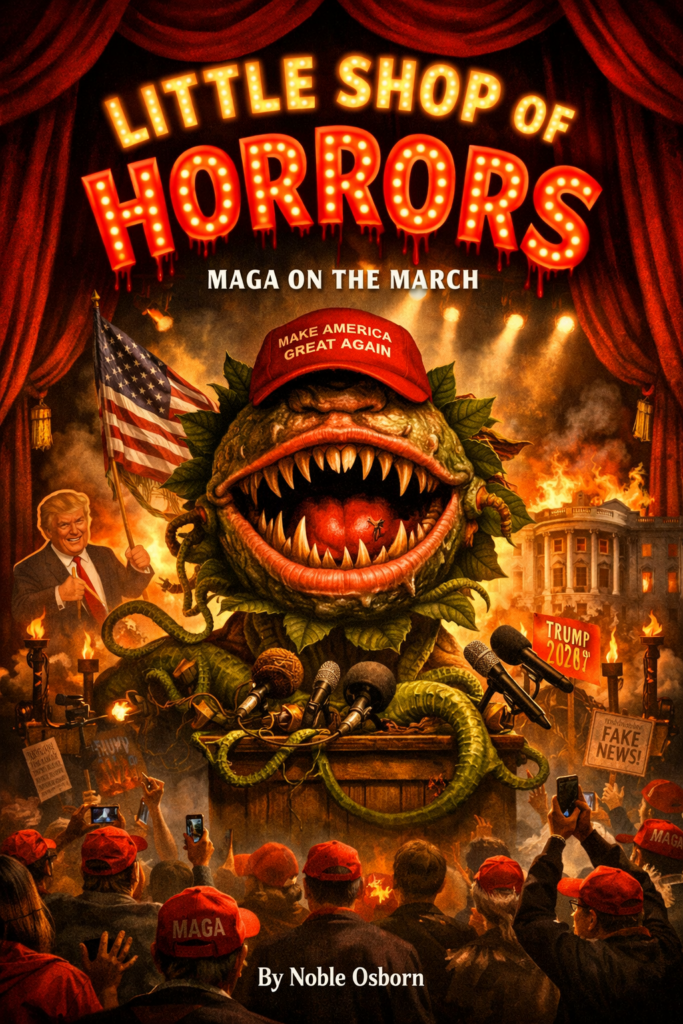
There was, in June 2025, a strange sort of perfect image: Donald Trump arriving in a tuxedo at the Kennedy Center for Les Misérables, booed and cheered in equal measure, while drag performers appeared in the audience as protest and counter-performance, and the whole evening took on what the Associated Press called a “MAGA-does-Broadway” atmosphere. The drama in the crowd rivaled the one onstage. Trump’s visit came amid a broader effort to reshape the institution in his own image and assert greater control over the cultural landscape. It was vulgar, theatrical, absurd, and exact. One hardly needed a critic. The review wrote itself.
That is the thing about MAGA: it does not merely use theatre. It understands that politics, at a certain pitch of decay, can become theatre’s hungrier cousin. Not drama, exactly. Drama still implies conflict that might teach. Theatre at least admits the presence of costume, staging, audience, cue. MAGA prefers something tackier and more ravenous. It prefers spectacle with teeth. It prefers the set piece that devours the set. It prefers the chorus chanting while the plant grows larger in the corner.
The movement has often been described in the language of grievance, but grievance is too soft a word for what is really being staged. Grievance sounds like a complaint filed through ordinary channels, a moral injury waiting for redress. This is not that. This is appetite taught to think of itself as innocence. This is resentment dressed up as righteous deprivation. This is the insistence that no meal is large enough, no enemy humiliated enough, no institution captured enough, no headline lurid enough to satisfy the creature once it has learned that the crowd will clap each time it opens its mouth.
Reuters, in a close examination of Trump rallies, described them as all-day productions blending revival meeting and carnival, carefully designed to deliver an emotional experience. The same reporting noted the attention paid to look, tone, and musical atmosphere, with Trump himself involved in shaping the feel of the event. This is not incidental ornament. It is the method. The politics is not merely expressed through the performance; the performance is the politics. The merchandise, the chants, the familiar entrance music, the camera-ready grievance, the ritual naming of enemies, the promise that humiliation is about to be redistributed more fairly this time—these are not accessories to a program. They are the program.
Like Audrey II, the monster in Little Shop of Horrors, MAGA is most effective when it convinces frightened or disappointed people that feeding it is the practical thing to do. Just a little compromise. Just one more indulgence. Just one more norm bent until it creaks. Just one more enemy singled out for the delight of the house. In the musical, the horror is not only that the plant is monstrous. It is that everyone around it keeps discovering reasons to collaborate. The appetite becomes infrastructure. The devouring becomes employment. People begin by managing the thing and end by serving it.
That is why satire alone has never been enough. MAGA has always possessed one of camp’s darkest advantages: it can metabolize mockery. It can wear vulgarity as proof of authenticity. It can turn bad taste into class warfare and incoherence into charisma. It has learned that the American public, exhausted and oversimulated, often mistakes volume for conviction and repetition for truth. The movement does not blush when it becomes ridiculous. It merchandises the ridicule, prints it on a T-shirt, and sells it in the lobby before the second act.
And the lobby has expanded. Reuters reported in late 2025 that MAGA-aligned influencers and Trump officials had formed an increasingly powerful alliance, one aimed at perceived adversaries, the amplification of false claims, and the reshaping of the media landscape itself. That matters because every monster needs not only food, but a greenhouse. Outrage is not enough on its own. It must be lit, misted, circulated, and made ambient. A movement built on theatrical appetite survives by keeping its audience in a state of emotional malnutrition—never full, never calm, never permitted to leave the auditorium and discover that sunlight exists elsewhere.
The emotional logic underneath this is not mysterious. Researchers at Berkeley’s Othering & Belonging Institute describe authoritarian populism as cultivating an in-group identity rooted in fear and grievance toward an identified “other,” while also pitting “the people” against a vaguely corrupt elite. That formula is especially potent because it offers belonging to people through hostility. It gives them a chorus to join, a villain to hiss, and a story in which every frustration can be converted into moral entitlement. It is community by exclusion, fellowship by scapegoat, ensemble work for the spiritually underfed.
This is where the metaphor of the monstrous plant becomes almost too neat. MAGA does not feed on policy success; policy is often beside the point. It feeds on attention, on spectacle, on the ecstasy of transgression without consequence. It feeds on the pleasure of watching institutions flinch. It feeds on the old American fantasy that cruelty, if theatrically enough performed, can be mistaken for strength. It feeds on a crowd’s desire to believe that someone else will finally be made to pay for history’s humiliations. Every movement has symbols. This one has cravings.
And yet the most disturbing thing is not the monster’s size. It is how public its cultivation has become. Nothing is hidden backstage. There is no mask slipping, because the mask itself has become the face. The show tells you what it is every night. The rally is built as emotional liturgy. The media echo turns grievance into weather. The cultural takeover arrives in evening wear and sits down at the theatre as though conquest were merely another opening-night engagement. We are long past the phase of asking whether the plant is dangerous. The roots are through the floorboards.
So the lesson of Little Shop of Horrors for this political age is not simply that evil can seduce. We know that already. It is that a devouring force rarely arrives announcing itself as devouring. It arrives as appetite with a wounded backstory. It arrives as entertainment. It arrives asking only for a little room, a little patience, a little blood. It promises to make the timid visible, the humiliated powerful, the ignored unforgettable. By the time it has learned to sing, most of the damage has been done.
MAGA remains, above all, an American musical of insatiability: big hooks, bright lights, familiar villains, comic grotesques, and a chorus that keeps insisting the feast is justice. But the final image is not triumph. It is consumption. Not a movement that built a future, but one that kept eating the stage.
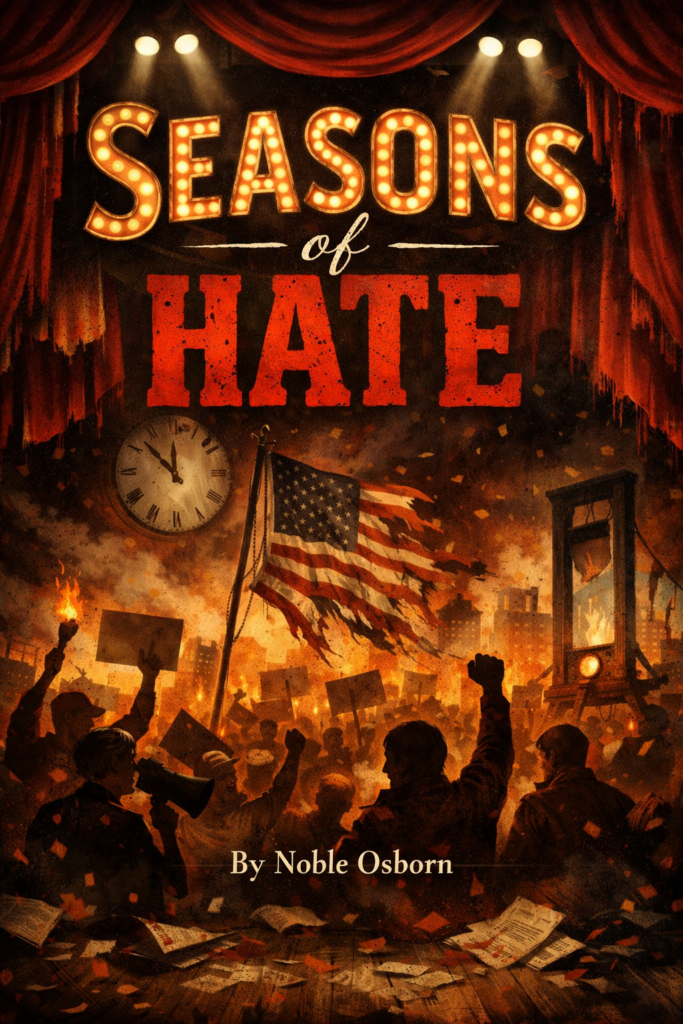
There was always something miraculous about the premise: that a life could be measured at all.
Not solved. Not redeemed. Not made pure. Merely measured. Counted in something warmer than achievement and more durable than spectacle. A year reduced not to profit, punishment, conquest, or applause, but to affection, survival, touch, companionship, witness. The old theatrical insistence was not that love saves us from history, but that it gives history a human scale. It tells us what hurt cost. It tells us what endurance meant. It tells us whether we managed, however briefly, to remain alive to one another while the city burned around us.
It is difficult now to imagine a public culture willing to accept such a measure.
We live instead in an age of grievance so over-rehearsed it has begun to mistake repetition for depth. Injury is no longer only suffered; it is curated. Rage is not simply felt; it is staged, lit, amplified, and sold back to its audience as identity. Entire political movements now depend upon the promise that resentment is the truest form of citizenship. To be aggrieved is to be initiated. To be offended is to belong. To be perpetually wronged, or at least to perform perpetual wrongedness, is to be admitted into the chorus.
This is not the old grief of those denied bread, dignity, safety, medicine, shelter, or recognition. That grief remains real, and it remains vast. It has sung from tenements, hospitals, sidewalks, shelters, and graves. It has sung from bodies forced to live on less, love under threat, and die under policy. It has always deserved witness. But grievance culture is something different. It is not the cry of the dispossessed so much as the hobby of the spiritually overindulged. It is the emotional economy of people taught that any interruption in their centrality constitutes violence. It is the sour privilege of those who experience the existence of others as a form of theft.
The result is a society increasingly incapable of measuring itself in anything but outrage.
This outrage is marketed to us as authenticity. We are told that fury is honesty, that contempt is discernment, that public cruelty is merely candor without cosmetics. We are encouraged to believe that empathy is weakness, complexity is betrayal, and exhaustion itself is proof that one has been paying attention. Resentment becomes not a feeling one passes through but a moral home one decorates. People arrange their convictions there like furniture. They light it theatrically. They invite others in to admire the bitterness. Soon they no longer know how to leave.
Of course, resentment has always possessed a seductive rhythm. It simplifies. It flatters. It offers the lonely a cast list. It relieves the individual of the burden of ambiguity by handing them a ready-made villain and an endlessly renewable script. If love requires one to encounter another person in their terrifying fullness, grievance asks much less. It asks only that we sort. That we reduce. That we assign blame with enough confidence to drown out any subsequent doubt. It is emotionally efficient in the way junk food is nutritionally efficient: immediate, addictive, and devastating over time.
Political life has learned this lesson with frightening speed. The modern demagogue no longer needs a governing philosophy so long as he can produce a mood. He does not need coherence if he can provide catharsis. He need not improve material life if he can convert ordinary frustration into theatrical resentment, handing every disappointed citizen a mask, a slogan, and a target. The rally, the hearing, the debate stage, the campaign ad, the furious post, the clipped monologue, the nightly panel of paid indignation: all function as variations on the same exhausted production. The plot is always familiar. Something has been taken. Someone is to blame. Humiliation must be avenged. The audience leaves not enlightened but further addicted to its own adrenaline.
This is how grievance becomes culture: not by appearing occasionally, but by supplying the atmosphere. A whole people begins to breathe it without noticing. Children grow up in its weather. Marriage absorbs it. Friendship frays under it. Every conversation acquires the structure of an accusation. Every disagreement must be escalated into metaphysical threat. Even pleasure begins to feel suspect unless it comes with a side of denunciation. The citizen is gradually retrained as spectator, then as heckler, and finally as unpaid understudy for whatever authoritarian script arrives next.
What makes this condition especially bleak is how tired it is.
There is nothing fresh about perpetual resentment. It does not sharpen a society; it depletes one. It hollows the voice that performs it. It narrows the imagination to such an extent that people cease to recognize joy unless it has defeated someone. Under grievance culture, celebration becomes impossible without humiliation. Victory means very little unless another body can be made to wear its cost. Public discourse becomes a banquet at which no one eats, only points to the seating chart and screams. Everyone leaves hungry. Everyone insists they have been robbed.
And yet the performance continues, night after night.
Part of its durability lies in the fact that grievance feels like action. It mimics moral seriousness while requiring almost none of its discipline. To remain angry is easier than to remain attentive. To nurse a grievance is easier than to build a world. To sneer is easier than to mourn. And mourning, real mourning, is what grievance culture cannot tolerate. Mourning requires the admission of vulnerability. It asks us to confess that something valuable has been lost, perhaps through our own neglect, perhaps through cruelty too large for any single hand, perhaps through time itself. It softens the face. It slows the speech. It makes revenge look childish. Resentment cannot survive long in the presence of honest grief because honest grief asks what should be cherished, not merely who should pay.
The stage understood this long before politics did. Theatre has always known that a chorus of anger alone is monotonous. Something else must enter: tenderness, absurdity, desire, hunger, illness, debt, lust, panic, memory, the foolish hope that the next note might redeem the last. Without that complication, the song dies on its feet. Art does not endure by flattering our worst simplifications. It endures because it insists that people are more than the slogans they shout on their most frightened days.
This is why the ghost-light of a work like Rent still matters, even now, perhaps especially now. Not because it offers innocence. It does not. It was never innocent. It knew about precarity, disease, eviction, compromise, ego, betrayal, performance, hunger, and grief. It knew that communities fracture under pressure. It knew that youth can be as vain as it is brave. But it remained stubbornly unwilling to believe that cynicism was the highest form of intelligence. It refused to give contempt the final aria. However messy its hope, it kept returning to the dangerous proposition that human beings might still be measured by what they give one another in the dark.
Our age has countered with another arithmetic. Count the enemies. Count the humiliations. Count the slights, real and imagined. Count the headlines that confirm your despair. Count the bodies that can be mocked without consequence. Count the transgressions of strangers. Count the minutes until the next outrage. Count the years not in love, but in grievance compounded daily, until the very act of counting becomes a way of refusing to live.
This arithmetic is politically useful because it creates obedient misery. A population trained to measure life in anger will accept almost any master who promises better targets. It will surrender complexity for clarity, solidarity for suspicion, and liberty for the intoxicating permission to hate in public. Once resentment becomes a common language, cruelty no longer needs to justify itself. It merely has to keep time.
But a society cannot live forever under the rule of its own hecklers.
At some point, the house lights rise. The make-up streaks. The voice strains. The set begins to wobble under the weight of all that repetition. Grievance culture survives by pretending it is inexhaustible, but hatred is expensive. It drains the body that hosts it. It withers the institutions that normalize it. It leaves behind citizens who no longer know how to imagine themselves except in opposition to someone else’s existence. This is not strength. It is depletion wearing a soldier’s costume.
What, then, is the alternative?
Not sentimentality. Not a forced optimism thin as stage paint. Not the demand that people stop naming harm in order to appear civil. The answer is not less seriousness, but a different seriousness. A seriousness capable of distinguishing pain from performance, justice from vendetta, grief from grievance, witness from self-dramatization. A seriousness that asks not only what wounds us, but what we owe one another in response. A seriousness that remembers love is not a decorative emotion but a discipline of attention.
To measure a life in love was never a naïve proposition. It was and remains an insurgent one.
It resists every system that would rather count profit, loyalty, blood, enemies, votes, or likes. It refuses the cheap grandeur of resentment and asks instead whether we managed to keep one another warm, honest, visible, and alive. It is a harder measure because it cannot be shouted convincingly from a podium. It must be practiced in smaller places: in the room, at the bedside, in the friendship not monetized, in the stranger not scapegoated, in the refusal to turn another person’s vulnerability into public entertainment.
Perhaps that is why grievance culture hates it so much. Love is difficult to weaponize. It does not perform obedience as neatly as rage. It complicates the story. It gives the villain a mother, the outcast a face, the chorus a pulse. It threatens every politics that depends on reducing human beings to props in someone else’s revenge fantasy.
And so we remain between measures.
One counts seasons in bitterness, applause, accusation, and the shrill pleasure of being forever wronged. The other counts by presence, care, grief, risk, and the stubborn, unfashionable labor of remaining human. One leaves the audience inflamed and empty. The other sends them out altered, not because pain has vanished, but because it has been restored to proportion by love.
The question is no longer which song our culture is singing. We know that already. The question is whether we are still capable of hearing, beneath all that manufactured fury, another score trying not to be drowned out.
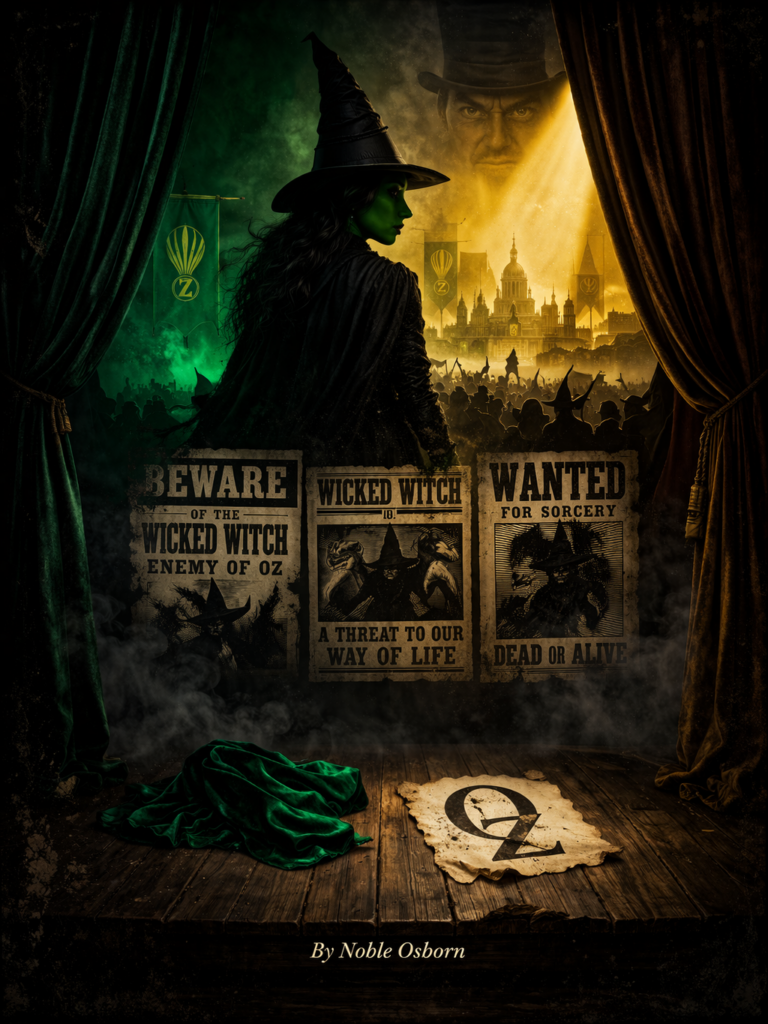
Before The Broomstick Became A Brand
Before Wicked became a juggernaut of green lights, soaring finales, and mass-market redemption, it was a stranger, harsher thing: a novel suspicious of charm, uninterested in easy innocence, and deeply attuned to the ways power teaches a public whom to fear. Gregory Maguire’s Wicked: The Life and Times of the Wicked Witch of the West does not simply revisit Oz from another angle. It reopens the entire moral architecture of the tale and asks, with a cool and unblinking intelligence, what it means for a society to need a villain.
That question is more unsettling than the cultural afterlife of Wicked sometimes allows. The Broadway phenomenon, for all its pleasures, has softened the novel’s roughest edges into something more emotionally legible and commercially usable: friendship, betrayal, misunderstood womanhood, the possibility that history got a single person wrong. Maguire’s book is interested in something less comforting. It is not merely the story of a woman misread. It is the story of a political order that depends upon misreading, distortion, simplification, and the steady manufacturing of moral panic.
That is what makes the novel feel so alive now. Not because it predicts any one administration, ideology, or public scandal with neat allegorical precision, but because it understands the ancient mechanism by which societies consecrate themselves: they identify the disorder they cannot bear to recognize in themselves, then pin it to a body.
In Maguire’s Oz, wickedness is not a fairy-tale quality like a hooked nose or a black hat. It is a category produced by power. It is conferred, circulated, and made legible through story. Long before Elphaba becomes a symbol, she is a problem to others simply by existing: too green, too strange, too intelligent, too resistant to the scripts that would make her useful or harmless. She enters the world already under interpretation. Her body is read before her intentions are. Her difference precedes her.
Maguire understands that this is how monstrosity is usually made. Not by the monstrous themselves, but by a culture that requires visible containers for its fears. The so-called wicked person need not be innocent in every regard to reveal the structure surrounding them. In fact, the novel is strongest precisely because it refuses sainthood. Elphaba is not rendered as a spotless corrective to propaganda. She is difficult, often abrasive, morally inconsistent, wounded, politically alert, intermittently self-defeating, and incapable of becoming the sort of heroine a public would know how to reward. This complexity is not a flaw in the novel’s design. It is the point. The book denies readers the relief of uncomplicated reversal. It does not say, “You were wrong; she was good all along.” It says something far more interesting and far more true: goodness and wickedness are not categories safely administered by regimes, churches, newspapers, or crowds.
That insistence gives the novel its adult gravity. Maguire’s Oz is not a bright contrarian trick played on childhood material. It is a fully politicized landscape in which theology, statecraft, prejudice, class tension, and species hierarchy jostle beneath the surface of fantasy. The land is not simply magical. It is administered. It surveils. It narrates itself. By the time readers understand how deeply the Wizard’s regime relies upon coercion and managed perception, Wicked has already shifted from revisionist fairy tale into something closer to political anatomy.
The novel’s treatment of the Animals remains among its sharpest and most chilling elements. Their marginalization is not incidental world-building. It is one of the book’s clearest signals that a state’s cruelty often begins with naming some lives as less fully alive, less fully speaking, less fully entitled to personhood. Once that demotion has been normalized, everything else follows with an ugly administrative ease. Here Maguire proves himself most interested in the drab infrastructure of dehumanization: rules, categories, permissions, exclusions, sanctioned humiliations. Evil in Wicked does not arrive as a dragon from the sky. It arrives in procedures, in rhetoric, in the deadening repetition of what everyone is suddenly expected to accept as normal.
That is why the novel’s moral atmosphere feels so much darker than its better-known adaptation. The Broadway version gives audiences the moving spectacle of reputation corrected by feeling. The novel is less optimistic about correction. It knows that public lies, once institutionalized, do not collapse simply because the private truth is more tender. A woman may be wronged, and still be ruined by the wrong. A people may participate in falsehood not because they are all individually sadistic, but because falsehood has been made into civic common sense. Myth, once harnessed to authority, becomes extraordinarily difficult to dislodge.
This is where Wicked becomes especially useful as a text for thinking about modern public life. Not because contemporary politics can be lazily mapped onto Oz one figure at a time, but because Maguire grasps the theatricality of moral consensus. Every regime needs lighting. Every campaign against the dangerous, the deviant, the impure, or the wicked needs costumes, scripts, repeated cues. The public must be taught not only whom to condemn, but how to feel while condemning them. It must be given a story in which its fear appears virtuous, its punishments prudent, its cruelty regrettable but necessary.
Elphaba is intolerable to this order not only because she dissents, but because she resists flattening. She cannot be made charming on demand. She cannot be folded smoothly into the decorative world around her. She will not stop noticing the violence others have decided to step around. In that sense, the novel’s central conflict is not between good and evil so much as between legibility and conscience. Oz can absorb eccentricity. It can merchandise difference after the fact. What it cannot easily absorb is a figure who exposes the moral fraud beneath its categories.
Maguire also deserves credit for refusing the reader the luxury of clean political romance. Radical consciousness in Wicked is not glamorous. It is lonely, compromised, frequently ineffective, and shadowed by the knowledge that seeing clearly does not guarantee acting well. Elphaba’s seriousness does not rescue her from error. Her resistance does not spare others harm. The novel refuses the sentimental fiction that once you understand the system, you are automatically purified of its damage. What it offers instead is something rarer: the tragedy of a woman who recognizes the machinery and still cannot escape being ground within it.
That tragic dimension is what keeps Wicked from becoming merely clever. A lesser book would stop at inversion and call it subversion. Maguire goes further. He asks what revision costs. He asks what happens when the discarded figure at the edge of a beloved story is not only misunderstood but historically necessary to the story’s own coherence. Dorothy’s bright moral universe, in retrospect, depends upon someone else being available for darkness. Childhood narrative requires contrast; politics requires enemies; national myth requires bodies onto which contradiction can be transferred. Wicked exposes that transfer with unusual force.
To revisit the novel now is to encounter a text far less interested in vindication than in contamination. Not “she was good and they lied,” though there is some of that, but “the categories themselves were rotten, and everyone who lived within them was marked.” That is a more destabilizing proposition, and a braver one. It leaves readers with less catharsis and more responsibility. If wickedness is made, who makes it? If monstrosity is assigned, who benefits? If a society repeatedly needs certain figures to stand in for corruption, danger, perversity, or social decay, what does that reveal about the society’s own moral imagination?
Before the blockbuster, before the T-shirts and the emerald branding and the softened glow of cultural affection, there was this book: strange, baggy, cerebral, severe, and politically alert. It is not always elegant in execution. At times it sprawls. At times it withholds warmth so stubbornly that readers may admire it more than love it. But perhaps that, too, is part of its integrity. Wicked is not designed to charm us into agreement. It is designed to unsettle the terms by which agreement is reached.
What remains most powerful about Maguire’s novel is its refusal to let the public off easily. It does not ask only whether Elphaba was truly wicked. It asks why so many people were ready, even eager, to believe she must be.
And that is a question no age outgrows.
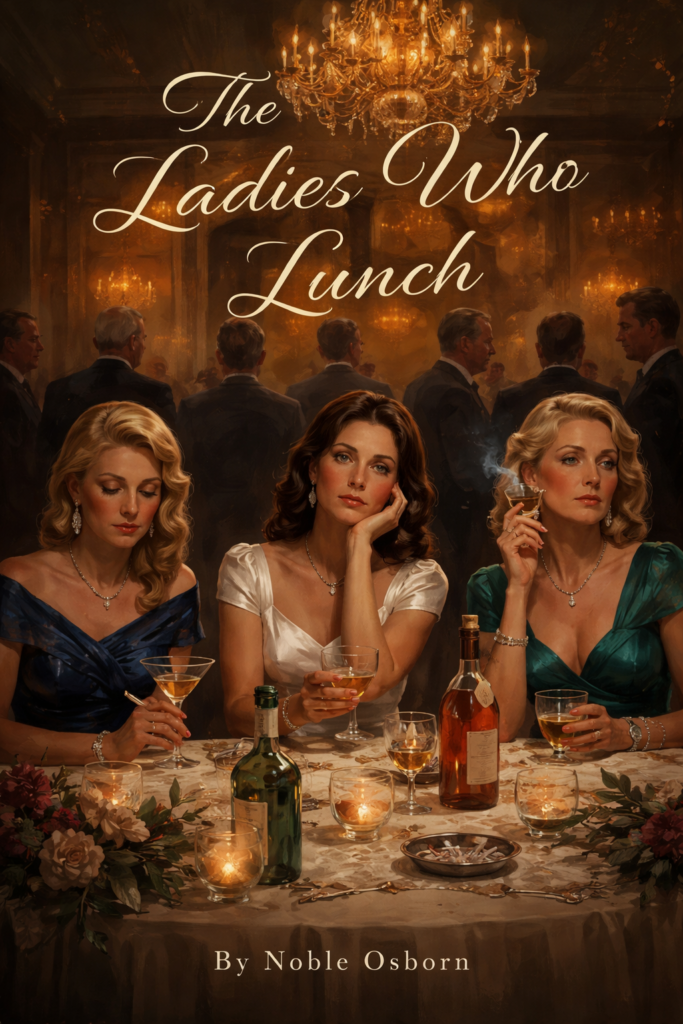
There is always a table.
It may be set in the East Room, beneath chandeliers disciplined into stillness. It may stand in a hotel ballroom with folded napkins and sweating water glasses, in a private club with hushed carpets and oil portraits, in a donor’s dining room where the silver is older than the republic and the help knows not to meet anyone’s eye. It may be no table at all, only a line of women standing shoulder to shoulder at a campaign stop, smiling into camera flashes while the men talk about strength, markets, God, war, law, family, freedom. But the arrangement is always the same. They are seated beside power. They are dressed for composure. They are expected to make the whole thing appear human.
Politics has always depended on theatre, and no theatre is more punishing than the one that demands a woman play reassurance while history is busy sharpening its knives.
The politician’s wife is one of public life’s oldest and loneliest roles. She is not quite an elected official, not quite a private citizen, not quite a celebrity, not quite a hostage, though she may feel like all four before the dessert course. She is asked to absorb contradiction as if it were part of her tailoring. She must be glamorous but not vain, intelligent but not threatening, loyal but not legible, warm without being loose, polished without appearing expensive, patient without looking passive. She must laugh at the right volume. She must place a hand on a forearm at precisely the right moment. She must turn toward the cameras as though she has not heard what was said in the car, at the fundraiser, in the hallway, over the sink, over the ice clinking into the third drink of the evening.
She must be seen, constantly, and known, never.
What is swallowed in such a life is rarely discussed with any seriousness. The public is greedy for surfaces. We are shown the holiday portrait, the campaign trail anecdote, the rally embrace, the state dinner dress, the soft-focus reminiscence about courtship. The role is lit like a musical number and flattened to the size of a campaign brochure: here is the wife, proof of normalcy; here is the marriage, proof of stability; here is the smile, proof that the man can be trusted in rooms you will never enter.
But the smile is part of the costume department. It tells us almost nothing.
The wives of politicians are expected to perform emotional sanitation for systems that would disgust us if properly lit. They stand beside ambition and call it duty. They stand beside cruelty and call it strain. They stand beside infidelity, corruption, ideological rot, private humiliation, public sanctimony, and the endless vulgarity of men who mistake being obeyed for being loved. Then they are asked to host lunch.
Of course some women wield this role as strategy. Some learn to bend it, weaponize it, glide through it with a smile so refined it becomes its own form of threat. Some are true believers. Some are co-authors of the project. Some know perfectly well what the performance costs and judge it worth the price. Not every woman seated beside power is merely its victim. History would be much simpler, and much duller, if that were so.
But even complicity has a body. Even ambition has a bloodstream. Even the woman who understands the script, approves the script, and helps revise the script must still live inside the physical toll of endless self-management. The loneliness remains. The surveillance remains. The pressure to be decorative, forgiving, and useful remains. One can benefit from the table and still be consumed by what it demands.
That is one of public life’s least sentimental truths: privilege does not cancel psychic damage. It merely upholsters it.
The lunch itself matters more than it appears to. Lunch is a feminine hour in the political imagination—not because men are absent from it, but because women are expected to make it pleasant. Lunch is where the rough edges of statecraft are covered with linen. Lunch is where policy’s violence is translated into anecdote, where donors are reassured, where alliances are softened by floral centerpieces and careful seating charts, where the wife becomes the unofficial minister of atmosphere. She remembers names. She asks after sons at college and mothers recovering from surgery. She tells a charming story about the dog. She wears color diplomatically. She radiates steadiness while the machinery of reputation hums beneath the tablecloth.
And afterward, what then?
Afterward comes the green room silence of private life: the hotel suite, the governor’s mansion bedroom, the private elevator, the plane, the mirror with its merciless bulbs, the makeup wipes gone gray with the day’s performed face. Afterward comes the drink poured not for pleasure but descent. Afterward comes the pill offered by a doctor who understands discretion, the little amber bottle tucked into a handbag beside lipstick and mints and emergency bobby pins. Afterward comes the numbing routine by which a woman survives being treated as a public annex to a man’s story.
It is impossible to think honestly about these women without thinking about addiction—not only to alcohol or pills, though certainly those, but to role itself. To the adrenaline of proximity. To the narcotic structure of being needed everywhere and understood nowhere. To the ritual of dressing for battle and calling it a luncheon. To the deadening glamour of repetition. To denial as a civic art form.
A woman in such a role may drink because she is lonely. She may drink because she is furious. She may drink because she is bored out of her mind by her own life and ashamed to admit it. She may drink because liquor is quicker than speech and safer than truth. She may take pills because the body, unlike the face, eventually refuses performance. Because one cannot smile on four hours of sleep forever. Because there are bruises no wardrobe can conceal and griefs no speechwriter can edit. Because every day requires a fresh application of composure and somewhere, somehow, the nerves must be quieted enough to endure the cameras again.
There is a long, unglamorous history hiding beneath the polished one: tranquilizers in medicine cabinets, bourbon in crystal, wine before noon, secrets tucked under brooches and in desk drawers, wives sent to “rest,” wives dismissed as fragile, wives mocked for excess after being marinated for years in conditions designed to produce it. We prefer our political women symbolic—saints, fools, martyrs, ice queens, enablers, style icons, embarrassments. The category of person is less appealing to us than the category of emblem. But emblems do not wake at three in the morning with their jaw clenched so hard it aches. Emblems do not stare at themselves in a powder room and think, for one dangerous second, that if they vanished the event would continue almost seamlessly without them.
Persons do.
And it is personhood that the role is built to erode.
The politician’s wife is meant to seem indispensable and interchangeable at once. She must matter immensely but only in approved ways. Her significance must be intimate, moral, atmospheric. She can steady the room, soften the image, sanctify the man, humanize the slogan, but she must never quite claim the stage as her own unless invited there by the campaign. She is visible enough to be scrutinized and secondary enough to be denied full authorship. It is a perfect arrangement for producing isolation. Everyone sees the dress. Almost no one sees the cage.
This is why the title carries such bitterness. Lunch sounds trivial. Lunch sounds civilized. Lunch suggests ladies, hats, chatter, restraint. But the phrase has teeth. It always did. There is acid in it, and pity, and rage sharpened by overfamiliarity. The lady who lunches is not merely idle. She is often trapped in one of patriarchy’s most elegant holding patterns: maintained, displayed, underestimated, and quietly deteriorating beneath excellent tailoring.
To say this is not to absolve every woman who has stood beside monstrous power. Some of them defended the indefensible with superb posture. Some helped package policies that damaged the poor, endangered women, brutalized queer people, fortified racism, sanctified greed, and called the result virtue. Some perfected the smile not because they were broken by the script, but because they knew exactly how well it sold. Public womanhood beside power can be coerced, but it can also be disciplined into loyalty so deep it resembles devotion.
Still, even devotion can carry despair in its hem.
The tragedy is not only that these women are hurt. It is that the role often asks them to become custodians of the very structures hurting them. Host the donors. Defend the husband. Praise the family. Protect the image. Endure the humiliation. Refill the glass. Bless the arrangement. Smile at lunch.
And smile especially when there is nothing left to smile about.
Perhaps that is the most theatrical part of all: the insistence that composure is proof of health. That because the table remains set, the woman beside it must still be well enough to dine. Politics loves this illusion. The republic is wobbling, the marriage is curdling, the husband is lying, the press is circling, the body is exhausted, the spirit is turning to glass—but look, luncheon proceeds. The flowers are fresh. The guests are seated. The wife has arrived in silk.
The show, then, can go on.
But only if someone keeps paying for what is swallowed.
In the end, the politician’s wife is not simply a supporting character in a man’s ascent. She is often the hidden ledger of its cost. In her posture one can read the century’s instructions to women: absorb, decorate, excuse, survive. In her loneliness one can hear the hollow acoustics of rooms where power dines very well and love, if present at all, is expected to sit quietly and not make a scene.
The ladies who lunch are not all innocent. They are not all victims. They are not all drunk, nor abandoned, nor trapped beyond self-knowledge. But neither are they the polished symbols public life prefers to display. They are women in a role built from appetite and silence, from loyalty and staging, from proximity and erasure. They are asked to make brutality look civilized, to make loneliness look elegant, to make endurance look like grace.
And for that labor—emotional, aesthetic, chemical, spiritual—we offer them a place card, a camera flash, and another pour.
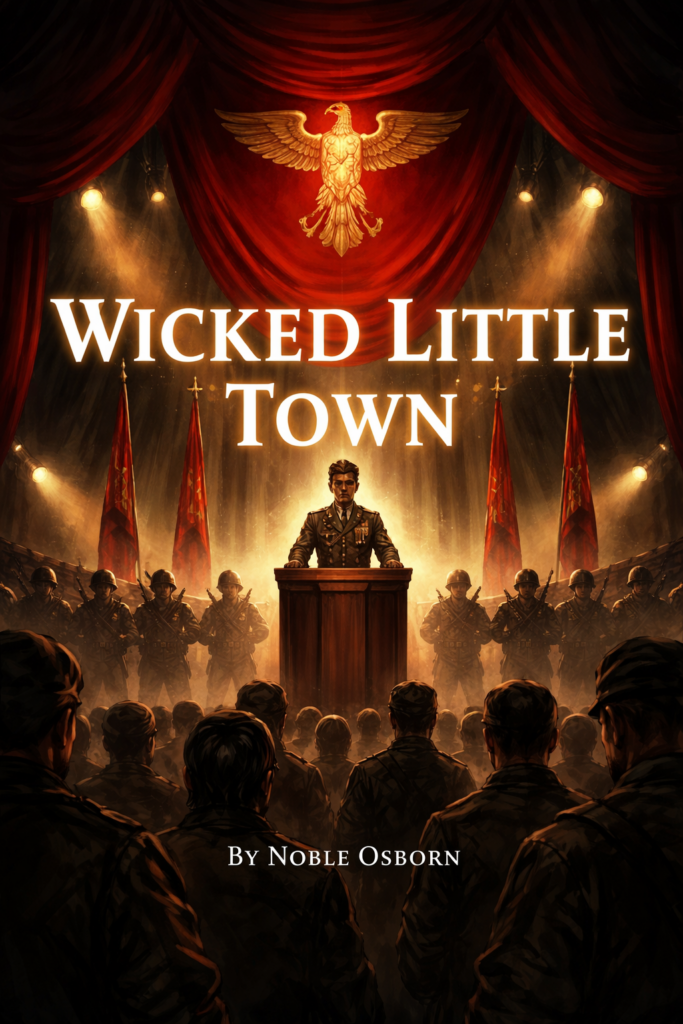
A coup is often described as if it were only a matter of force.
Troops move. Doors are sealed. Broadcasts are interrupted. A seal is pressed onto paper. A president vanishes into exile, prison, or silence. Somewhere, in a capital city suddenly made strange to itself, men with polished shoes and disciplined faces announce that order has been restored.
But force alone does not explain the strange coherence of a takeover. Violence may clear the stage, but it does not by itself hold the audience. For that, something more elaborate is required. A coup must also be staged. It must dress itself. It must light itself. It must choose its camera angle, rehearse its vocabulary, choreograph its entrances, and decide, with exquisite care, when fear should appear in uniform and when it should arrive in the calm voice of administration.
The takeover succeeds not only when it seizes the ministry, the palace, the parliament, the television station. It succeeds when it seizes the image. When the public is made to feel that what has happened was not a rupture but an inevitability. Not improvisation but necessity. Not theft but transition. The old order is not merely removed; it is made to look as though it has already exited stage left.
That is why coups so often feel theatrical even when they are bloody. They understand the costume of authority. They understand the value of a podium, the moral seduction of a flag, the hard grammar of boots in formation. They understand the power of a repeated phrase. They know that slogans are not arguments but cues. Their function is not to persuade in the deepest sense. Their function is to regulate the atmosphere. They tell the audience when to gasp, when to nod, when to stand still and pretend this is all terribly regrettable but entirely necessary.
A takeover is never merely an assault on institutions. It is an assault on perception.
The theatre of authority begins, as theatre often does, with wardrobe. A uniform is among the most efficient costumes ever devised. It compresses hierarchy into cloth. It transforms the body into a symbol and the symbol into a command. Medals, braid, epaulettes, ribbons, dark glasses, gloves, ceremonial belts: all of these communicate before a word is spoken. They do what costume has always done onstage. They tell us who may enter, who may order, who may punish, who may survive. They spare the regime the burden of explanation by making power legible at a glance.
Civilian takeovers understand this too. When the coup arrives in a suit instead of a general’s dress uniform, it is not less theatrical. It is merely playing a different role. The technocrat, the emergency steward, the constitutional guardian, the man who insists that he does not want power even as he arranges the microphones to receive it—these are costumes too. The authoritarian imagination is rarely careless about how it appears. It knows when to look martial and when to look managerial. It knows that panic in the streets may require a fatherly voice at the desk. It knows that tanks may frighten, but paperwork can tranquilize.
If costume establishes authority, choreography teaches obedience. Military and governmental seizures of power depend upon movement in space: who stands where, who enters first, who is permitted to flank the leader, who remains visible behind him, who disappears. These things are not incidental. They are a language. The line of armed men across the steps, the careful arrangement of officials at a press conference, the solemn procession through a captured building—these are acts of blocking. They place the body politic into a new geometry.
Fear, too, must be choreographed. If it arrives all at once, without modulation, it may provoke chaos, resistance, martyrdom. More useful is the graduated performance: first uncertainty, then warning, then selective punishment, then the public display of consequences. Curfews are a kind of stage direction. Checkpoints are set pieces. The rumor of arrest does as much atmospheric work as the arrest itself. Citizens learn their marks. They lower their voices. They choose different routes home. They stop gathering in clusters. They begin, without always noticing, to participate in the production.
This is one of power’s darkest accomplishments: it recruits the audience into the cast.
Under conditions of forced consensus, repetition becomes everything. The slogan is rehearsed until it begins to feel less like a sentence than like weather. It is printed, spoken, echoed, chanted, embedded in the crawl beneath the news anchor’s face, recited by ministers, repeated by frightened neighbors, learned by children who can already hear which phrases are safe and which phrases end careers. Language becomes chorus. And the chorus, in authoritarian theatre, has only one job: to drown out improvisation.
That is why dictatorships and juntas are so hostile to genuine art, independent journalism, unruly satire, dissident clergy, queer life, student movements, unapproved mourning, and anyone else capable of breaking tone. These forces threaten not merely policy but staging. They introduce unsanctioned lines. They interrupt the rhythm. They remind the public that the performance can still be seen as performance, which is always dangerous to those who rule by managed spectacle. Once the audience begins to notice the lighting rig, the illusion weakens.
The coup therefore labors to erase the evidence of labor. Its greatest aesthetic ambition is to appear natural. It wants the abrupt to seem orderly, the violent to seem regrettable, the illegal to seem corrective. It wants to present itself as cleanup, as intermission, as a regrettable but disciplined reset before normal life resumes. It knows that the language of salvation is often more effective than the language of domination. So it announces stability. It announces renewal. It announces national destiny, public safety, moral recovery. It invites the people not to love it, perhaps, but to submit to the plot.
Image and timing are central to this. A seizure of power is often planned not only around troop logistics or parliamentary weakness but around the emotional calendar of a nation. Dawn matters. Holiday weekends matter. National crises matter. So do funerals, scandals, elections, bombings, blackouts, and moments of public exhaustion when the citizenry is most vulnerable to the seductions of a strong narrative. The takeover chooses its hour as carefully as a director chooses the moment a curtain rises. Too early and the audience is not ready. Too late and a rival story takes hold.
The first broadcast after a coup is never just information. It is a premiere.
Who speaks first matters. Whether the speaker appears standing or seated matters. Whether he is framed by soldiers or by bookshelves matters. Whether he promises mercy or threatens chaos matters. Whether the camera shakes or remains serenely still matters. Every choice says: this is real, this is under control, this is how the next scene will feel.
And there is always an audience beyond the nation itself. Foreign governments, markets, diplomats, investors, newspapers, diaspora communities—these too must be managed. The coup speaks outward as well as inward. It performs legitimacy for international consumption, adopting the language most likely to calm the spectators whose approval may translate into recognition, aid, or mere strategic indifference. This is one reason the rhetoric of authoritarian power is so often double-cast. At home it may thunder about enemies, betrayal, cleansing, discipline. Abroad it speaks of transition, responsibility, security, continuity. The same regime changes tone as deftly as an actor changing costume in the wings.
But however carefully staged, the takeover carries within it a weakness familiar to all theatre: it depends on continuation. It must keep being performed. Authority seized by spectacle cannot rest after opening night. It must be renewed in ceremony, in broadcast, in ritual humiliation, in patriotic pageantry, in the endless reproduction of inevitability. The crowd must assemble again. The slogan must be spoken again. The enemy must be named again. The fiction of unanimity is labor-intensive. Forced consensus is never silent; it is exhausting.
And in that exhaustion lies the possibility of refusal.
Because the truth obscured by authoritarian staging is this: fear is not the same thing as belief. Applause is not the same thing as consent. A square full of bodies can still contain private heresies. The repeated slogan may lodge in the air without ever fully entering the soul. People learn to mouth lines they do not accept. They survive by performance too. In wicked little towns and glittering capitals alike, under portraits and banners and official hymns, there remain those who understand exactly what they are watching.
They are the dangerous ones.
They are the ones who hear the false note in the anthem, who notice the extra beat in the marching line, who recognize that the man at the podium is not destiny but casting. They are the ones who remember that the set is made of wood, that the backdrop can tear, that the chorus can falter, that history’s most terrifying productions have often depended on the simple terror of no one breaking character first.
A coup wants to be mistaken for reality itself. It wants its staging to disappear into the world. It wants the public to forget that there were rehearsals, wardrobe choices, script revisions, cues, edits, retakes. It wants to become the only imaginable production in town.
But the stage always gives itself away eventually. A seam opens. A prop falls. A line is missed. Someone laughs at the wrong moment. Someone refuses their place. Someone steps out of the chorus and speaks in their own voice.
And once that happens, the whole performance shivers.
Because the coup is not only an event of force. It is an event of theatre. And theatre, however disciplined, always lives with the risk that the audience will see through it at last.
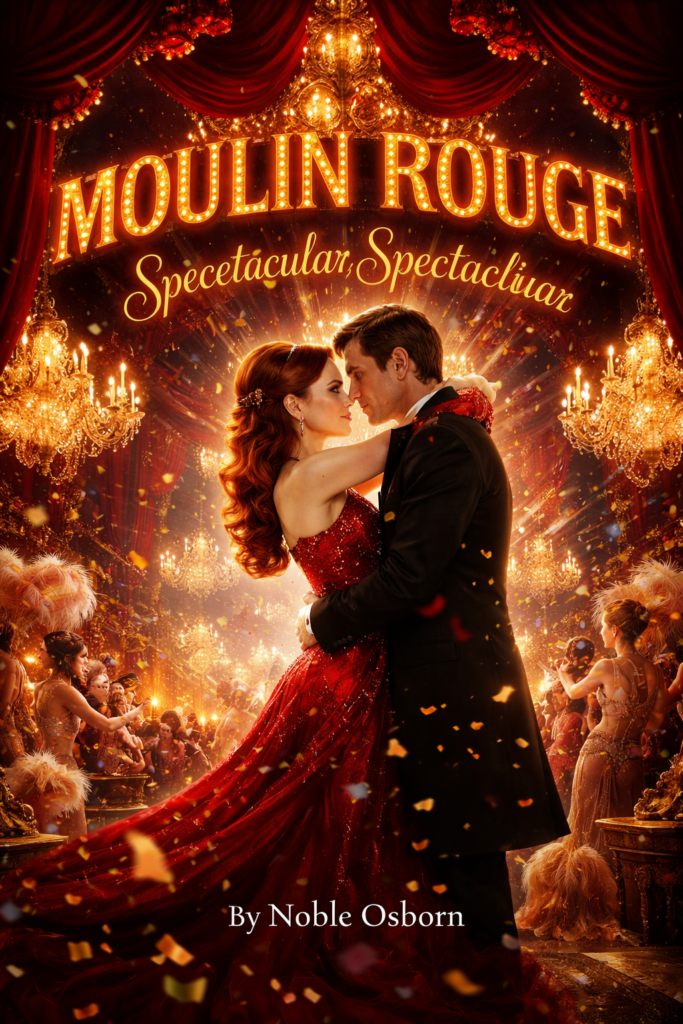
Baz Luhrmann’s Moulin Rouge does not merely begin. It erupts.
Before a character has properly entered, before the audience has settled into anything like narrative ease, the film has already announced its terms: excess, velocity, glitter, collapse. It comes at the viewer in fragments and flourishes, in cancan kicks and camera swoons, in colors so fevered they seem less designed than hallucinated. It is not interested in realism. It is interested in seduction. More precisely, it is interested in what seduction costs when it becomes a way of life.
That is why Moulin Rouge remains so strange, and so affecting, even now. It is remembered, often rightly, as a maximalist spectacle: the jukebox delirium, the red velvet fantasy, the swooping bohemian ecstasy of Paris as a city made not of streets and stone but of performance itself. Yet beneath all that lacquer, Luhrmann’s film is not fundamentally a celebration of glamour. It is an autopsy of it. Its beauty is always already bruised. Its extravagance arrives with the stale perfume of panic beneath it. The diamonds sparkle because the room is dark.
This is what the film understands better than many more respectable romances: artificiality is not the opposite of sincerity. Sometimes it is the only way sincerity can survive.
The world of Moulin Rouge is constructed from surfaces so aggressively theatrical that they become their own emotional language. Satin, sequins, rouge, stage smoke, chandeliers, velvet curtains, painted desire — all of it announces performance, but none of it cancels feeling. On the contrary, the film’s great gamble is that by making everything stylized, everything overlit, everything too much, it can reach an emotional register that naturalism would only flatten. Love here does not emerge in quiet glances over coffee cups. It must sing through mash-up and melodrama. It must dress itself in spectacle because the world in which it lives has already commodified the body, the voice, and the dream.
That is the central ache of the film. Satine is not simply a courtesan elevated into tragic romance. She is a woman required to sell radiance while privately collapsing beneath the burden of it. Nicole Kidman plays her not as a distant jewel but as a person caught in the violent contradiction between display and exhaustion. She must be dazzling because dazzling is the currency that keeps her alive. She must be desired because desire is the whole economy of the room. The men around her speak in the language of possession, investment, rescue, patronage. Even affection arrives dressed as transaction. The theater needs her. The club needs her. The Duke wants to own her. The audience wants to adore her. Everyone requires her to remain luminous.
And so of course she is dying.
In lesser hands, that symbolism would feel crude. In Luhrmann’s, it becomes almost unbearably apt. Moulin Rouge is a film about a culture that consumes women as spectacle and then gasps at the fragility of the thing it has devoured. Satine is asked to glitter at precisely the moment her body can no longer afford the performance. Her tragedy is not only that she loves where she should strategically align. It is that she lives in a system where femininity itself has been staged as a continuous act of saleable brilliance. By the time she sings, the song is already an extraction.
If Satine is the film’s burning center, Christian is its necessary naïf: earnest, romantic, poor enough to mistake feeling for freedom, and young enough to believe that love can stand outside the market. Ewan McGregor gives him a tremulous sincerity that keeps the role from becoming merely decorative. Christian is not foolish so much as ideologically unprepared. He arrives carrying the bohemian catechism — truth, beauty, freedom, love — and discovers, as many idealists do, that love is the easiest principle to quote and the hardest to protect once money enters the room. His devotion is genuine, but it is also adolescent in the strictest sense: he wants love to transcend structure. The film, far crueler and wiser, knows better.
This is where Moulin Rouge becomes more than a sumptuous romance and turns into an argument about spectacle itself. The club is not simply a backdrop. It is a machine for transforming longing into product. The stage converts pain into entertainment, sex into atmosphere, fantasy into revenue. Even the film’s famous exuberance carries this knowledge inside it. The songs tumble over each other not because the world is free, but because it is crowded with borrowed feeling, secondhand desire, prefabricated emotional cues. The jukebox form matters. These are not untouched arias emerging from some innocent core of selfhood. They are cultural scraps, popular debris, communal emotional shorthand. The characters sing through a world already saturated with existing scripts for love.
And yet — the miracle of the film is that it makes this feel moving rather than cynical.
There is something almost perverse in how deeply Moulin Rouge believes in feeling while acknowledging that feeling is mediated, rehearsed, commercialized, and staged. A lesser film would sneer at performance as falseness. Luhrmann recognizes something older and sadder: people very often mean what they say most intensely when they are saying it through borrowed lines, costumes, poses, and songs. Lovers quote. Nations mythologize. politicians grandstand. The theater, at least, has the decency to admit it is made of curtains and light.
That is why the film belongs so comfortably in an issue devoted to theatre and political theatre. Moulin Rouge is not political in the blunt sense. It is political in the sense that all systems of spectacle are political: they determine who may be seen, who must perform, who pays, who profits, who is consumed, and what kind of pain can be made beautiful enough to sell. The film’s bohemian idealism glows against this machinery, but it never fully escapes it. Even rebellion must take the stage. Even sincerity must costume itself. Even love must become legible to an audience trained to applaud the glitter before it notices the blood.
And blood, in this film, is never far from glitter.
Its great visual achievement is not merely lushness, but lushness under pressure. Everything beautiful in Moulin Rouge appears to be on the verge of breaking: the voice about to crack, the jewel about to fall loose, the smile about to become a grimace, the curtain about to come down. This gives the film its peculiar emotional weather. It is intoxicated, yes, but also cornered. The fever is part delight, part diagnosis. For all its theatrical abandon, the movie understands desperation at the molecular level. It knows what it means to go on performing because stopping would reveal the emptiness, the sickness, the bargain, the fear.
That is why, despite its camp, despite its absurdity, despite its glorious determination to overdo everything, Moulin Rouge lands with real sorrow. It is not embarrassed by emotion. It risks grandeur in an age that mistrusts it. It believes that melodrama, handled with conviction, can tell the truth just as surely as restraint can. Perhaps more surely. Some devastations are too ornate to be spoken plainly. Some forms of longing only become visible once they are lit by chandeliers and sung at full volume.
Baz Luhrmann’s operatic fantasia remains what it always was: a spectacle of excess, yes, but also a confession. It knows that beauty can be fabricated and still wound us. It knows that extravagance can function as camouflage and revelation at once. It knows that performance is not what hides desperation, but what gives desperation its most unforgettable shape.
By the end, Moulin Rouge has stripped none of its sequins away. It has no interest in a purifying realism, no desire to apologize for its own lush delirium. Instead it does something riskier. It leaves the glitter intact and asks us to look through it. There, beneath the rouge and velvet, beneath the choreography and the applause, is the old tragic truth: the show was beautiful because it was doomed, and doomed because beauty was never allowed to be enough on its own.
That is the film’s brilliance. It is spectacular, certainly.
But more than that, it is spectacular in the oldest and saddest sense: a thing arranged for watching, luminous at a distance, and breaking the whole time.
When the set is struck
and the painted skyline carried off in flats,
when the velvet mouth of the curtain
closes over its last bright lie,
someone still remains
to sweep the glitter from the floor.
Not the star.
Not the man with his name in gold above the door.
Not the woman taught to die beautifully beneath a spotlight.
Not the smiling villain
with lacquered hair and a perfect bow.
No—
someone quieter.
The one who learned the harmony
without ever being asked to sing alone.
The one who stood three bodies back in the chorus,
ankles aching,
face fixed in brightness,
while history entered in costume
and called itself destiny.
We know that voice.
It is the voice that survives the overture.
The one that keeps breathing
after the anthem swells,
after the brass goes martial,
after the flags are unfurled from the rafters
like commandments
no one voted to obey.
This is how the public dream was staged:
a throne built of plywood and promise,
a podium lit like a sacred altar,
men in dark suits rehearsing grief,
women powdered into composure,
whole nations taught to stand on cue
for the cue itself.
Applause is a dangerous weather.
It makes the cheap set shimmer.
It makes the painted moon look holy.
It teaches the audience
to mistake repetition for truth.
Sing it again,
they say.
Louder this time.
Make the wound easier to follow.
Give us a melody we can march to.
Give us a villain we can recognize on sight.
Give us a lover pure enough to ruin.
Give us a city burning prettily in the wings.
And we did.
God, how we did.
We stitched our longing into costumes.
We pinned our fear behind smiles.
We learned where to turn our faces
so the tears would catch light
instead of falling.
We called it poise.
We called it patriotism.
We called it keeping the show alive.
But every chorus line conceals a limp.
Every standing ovation
contains at least one pair of reluctant hands.
Every grand finale leaves behind
the smell of dust, hot wire, sweat,
and something almost like prayer.
Especially prayer.
Not the public kind.
Not the one broadcast through microphones
to prove its own sincerity.
I mean the prayer whispered into a dressing-room mirror
by someone half out of makeup,
half out of faith,
asking who they are
without the false eyelashes of belief,
without the military jacket,
without the campaign grin,
without the soft-focus marriage,
without the role.
Who am I,
when the music cuts?
What is left
when the body no longer knows
whether it has been dancing
or running for its life?
The answer does not descend
in a chandelier of revelation.
No hidden orchestra rises to save us.
No benevolent director appears
with revised pages.
The answer is smaller than that.
More human.
More difficult.
A mouth, still warm.
A throat, still open.
A hand unclenching at last
from the borrowed script.
A single note
held past fear.
Then another.
This is how a new dream begins:
not with innocence—
we have used that costume already—
but with salvage.
With torn hems.
With wilted bouquets.
With yesterday’s headlines
ground into the stage like ash.
With the understanding
that spectacle is only one language of desire,
and not the truest one.
The truest one
is the breath taken before speaking plainly.
The refusal to make a monster
simply because the crowd requested one.
The refusal to die on cue.
The refusal to love only what glitters
and obey only what shouts.
After the last encore,
after the critics have folded their notebooks,
after the orchestra has packed its grief in velvet cases,
the dark remains—
but so does the ear.
So does the pulse
that once followed a conductor
and now must learn
a wilder timing.
So does the body
that has mistaken survival for choreography
and now, trembling,
tries one unscripted step.
Then another.
No spotlight blesses it.
No chorus catches it.
No crowd rises.
Still, it moves.
And because it moves,
the ruined set becomes a landscape.
The empty theatre becomes a country.
The silence becomes not absence
but permission.
Somewhere beyond the footlights,
morning waits uncostumed.
No fanfare.
No painted dawn wheeled in on tracks.
Only light
finding what the night forgot to hide.
We stand in it awkwardly.
Without our marks.
Without our lovers’ exits.
Without the old refrain to shelter us.
And yet—
there it is.
A new way to dream.
Not of empires singing forever.
Not of innocence restored by applause.
Not of wickedness cleanly named
and neatly buried beneath the final chord.
But of voices,
cracked and earthly,
learning to carry without permission.
Of tenderness that does not require spectacle.
Of truth that does not need a costume.
Of a stage no longer mistaken for a throne.
Of the soul after performance,
still ragged,
still luminous,
still able
to begin again.