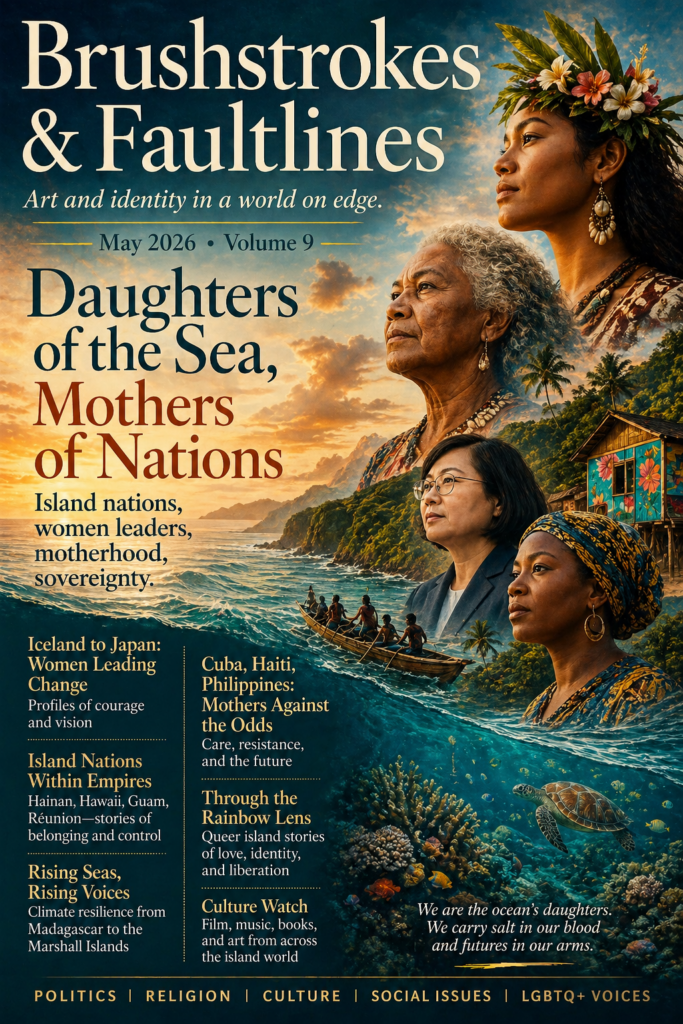
Table of Contents
Letter from the Editor
The Currents That Bind Us
Poetic Interlude I
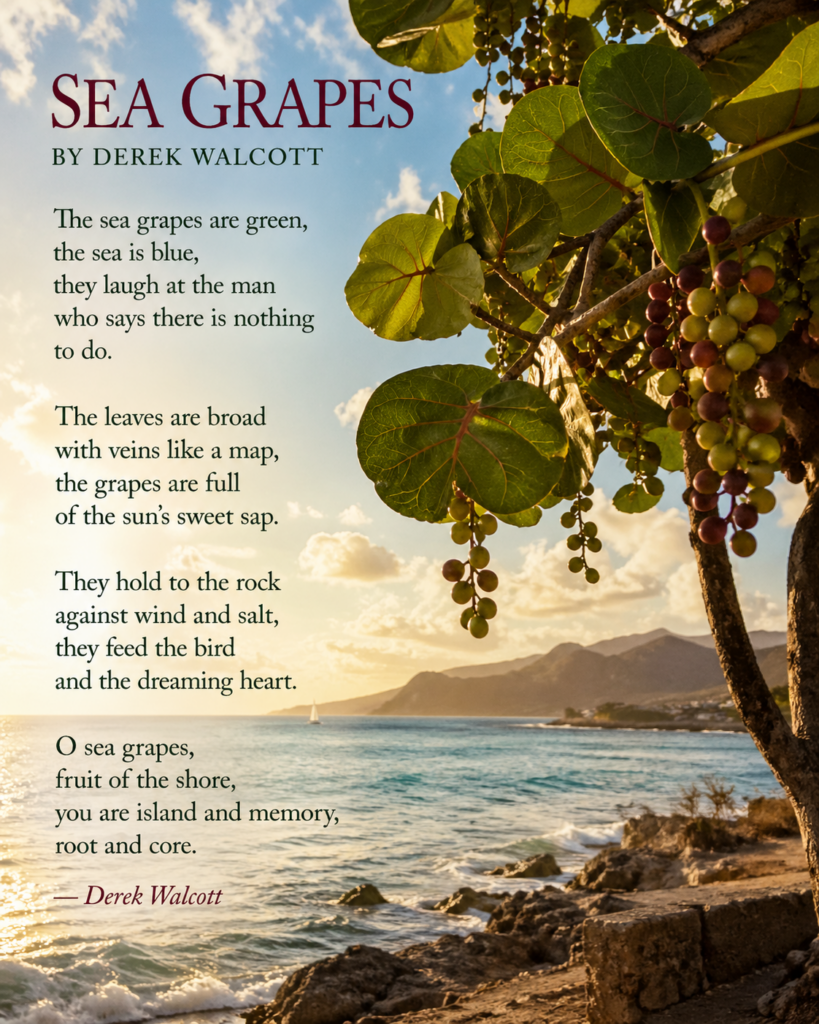
Derek Walcott, Sea Grapes
Hainan
China’s Free-Trade Experiment
Hawaii
Statehood and Sovereignty Movements
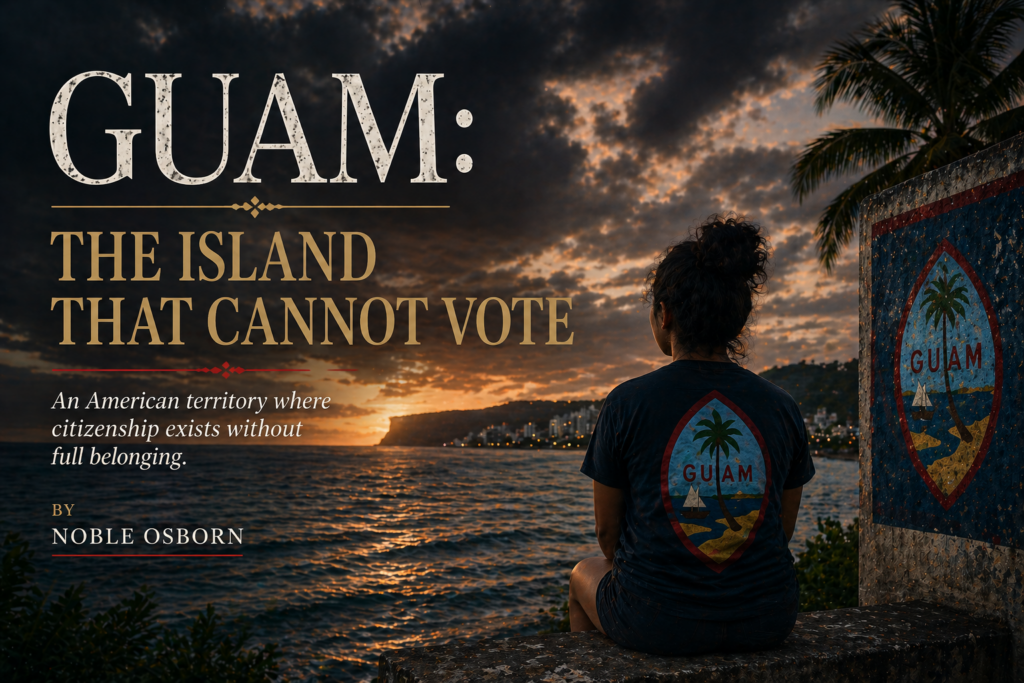
Guam
Futures of an Unincorporated Territory
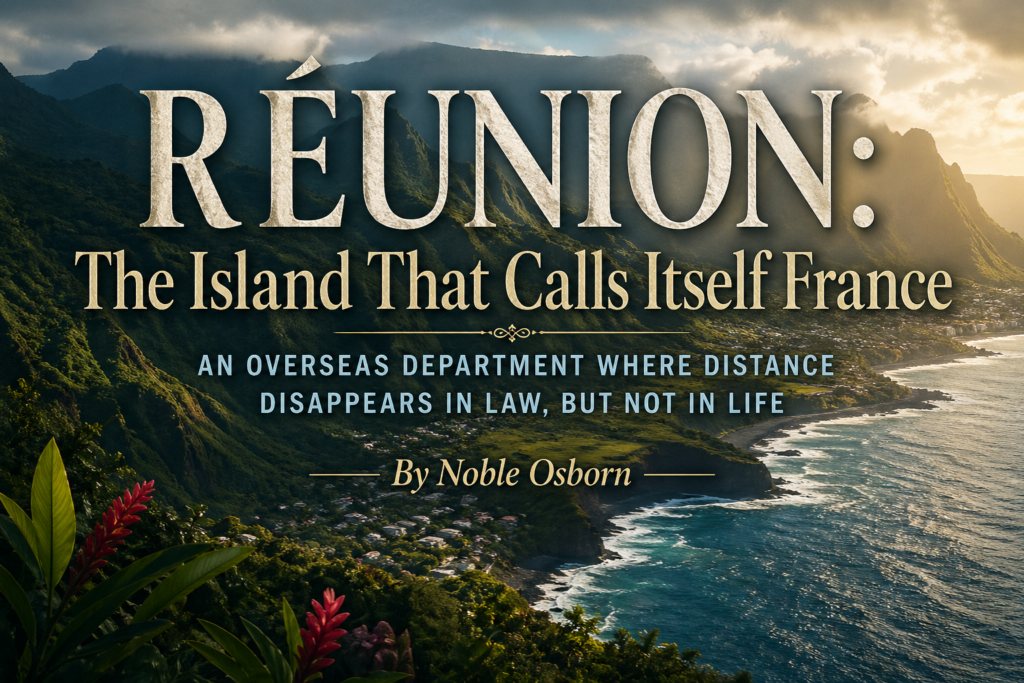
Réunion
France’s Indo-Pacific Anchor
Poetic Interlude II
Audre Lorde, A Litany for Survival
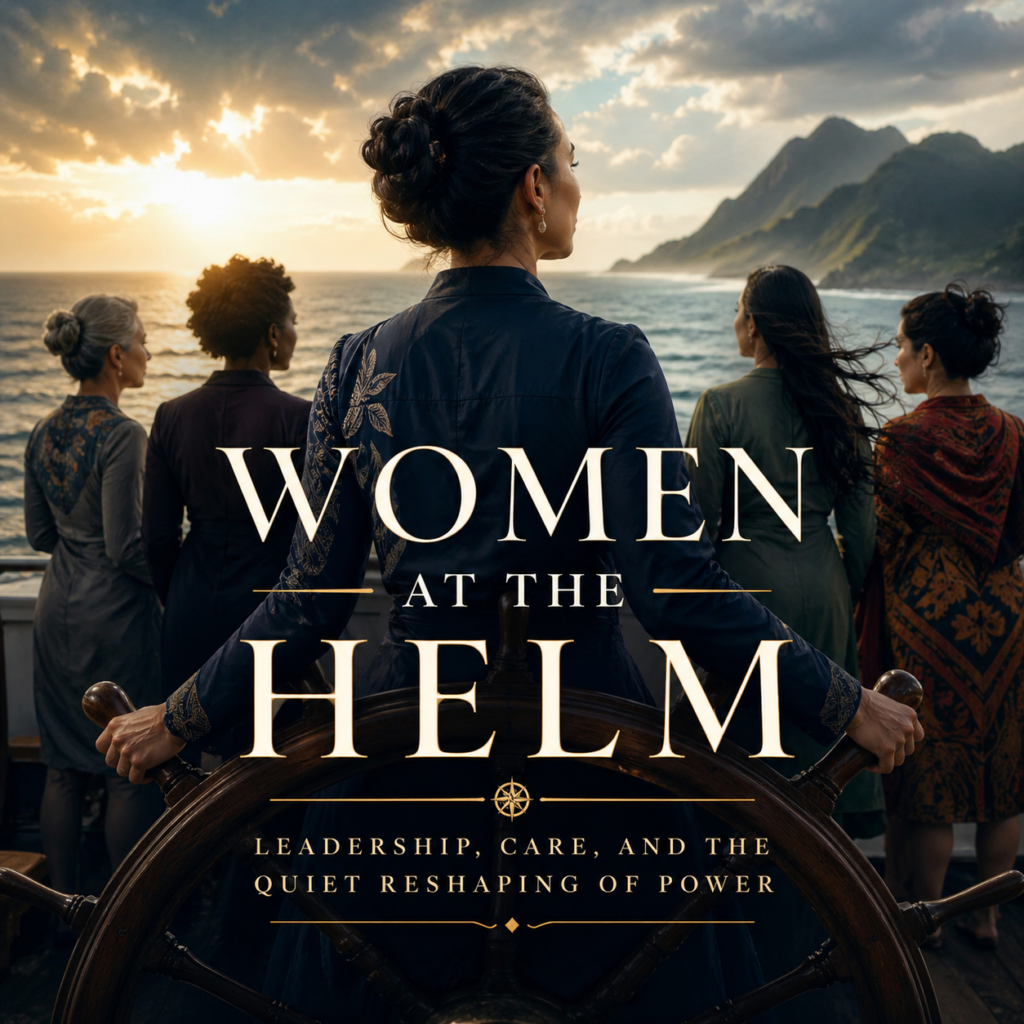
Women at the Helm
Leadership Across the Islands
Through the Rainbow Lens
Queer Island Stories
Poetic Interlude III
Pablo Neruda, Ode to the Sea
Mothers of Nations, Mothers of Children
Poetic Interlude IV
Epeli Hau‘ofa, Our Sea of Islands
Reflections in Verse
Original Poems on Motherhood, Sovereignty & Sea
Letter from the Editor – The Currents That Bind Us
Easter has come and gone, and the nights remain cold up here in the mountains of northwestern Arizona. For the first time in days, the wind has stopped its relentless howling. This morning, as I sit to write, there is a kind of quiet that feels earned. The sky is opening—blue stretching over rain-scented forests and distant peaks—and for a moment, the land feels like it is holding its breath between seasons.
It has been a strange spring. Warmth came too early this year, coaxing the fruit trees into bloom before their time. Then the cold returned, sharp and unyielding. Frost followed, and with it, loss. The trees, once heavy with promise, let go of most of their fruit. What had surged forward was forced to retreat.
And yet—what survived is beginning again.
Green has returned with a different kind of patience. Not the exuberance of early warmth, but something steadier. Something that has endured.
It is difficult not to see the shape of this issue in that pattern.
May brings with it Mother’s Day, and with it, an instinct to look toward women—not just as mothers in the literal sense, but as caretakers, stewards, and, increasingly, as leaders navigating a world that asks them to hold both tenderness and power at once. This issue, Daughters of the Sea, Mothers of Nations, began there. But as with most things, it grew outward.
I found myself thinking about islands.
Not as postcards or escapes, but as places defined by their edges. Places where the boundary between self and other, land and water, safety and exposure, is always visible. Islands can mean isolation. They can mean protection. They can mean memory, survival, fragility, or defiance—sometimes all at once.
And right now, islands feel like the front lines.
Greenland. Cuba. Pacific nations watching the ocean rise inch by inch. Territories tethered to distant powers. Places where sovereignty is negotiated in boardrooms far away, while the people who live there contend with storms, scarcity, and decisions made in their name.
These are not abstract tensions. They are lived ones.
Care versus power.
Dependence versus independence.
The same forces that shape nations also shape the smallest, most intimate spaces—homes, families, bodies. And it is often women, mothers in particular, who are asked to carry those contradictions. To nurture while defending. To preserve while adapting. To care for what is vulnerable while navigating systems that reward control.
There is tenderness in that. A profound, stubborn tenderness.
I see it in the stories of women leading island nations, not as symbols, but as individuals making decisions that ripple through entire populations. I see it in communities rebuilding after storms, in hands planting again after loss, in the quiet labor of keeping something alive when it would be easier to let it go.
But there is anger here, too.
Anger at the destruction of habitat by human hands. At the steady unraveling of ecosystems that once felt permanent. At political forces that treat places like Greenland or Cuba not as homes, but as assets, threats, or leverage. At the casualness with which entire landscapes—and the people and species within them—are placed at risk.
And beneath that anger, a deeper exhaustion.
The exhausted good people are here in this issue. The conservationists, the scientists, the local communities, the advocates—those who spend their days trying to protect what remains, to restore what has been damaged, to hold the line against forces that seem, at times, overwhelming. They work in the background, often unseen, while louder actors reshape the world for short-term gain.
They are, in many ways, like the trees outside my window.
They bloomed early.
They were hit by frost.
They lost more than they should have.
And still—they are trying again.
This issue is not an answer. It is not even a resolution. It is an acknowledgment of where we are standing: at the edge of land and water, care and power, loss and persistence.
If there is hope here, it is a quiet one.
Not the kind that promises everything will be saved, or that the tides will simply recede. But the kind that exists in continuation. In the decision to plant again. To lead anyway. To care, even when care feels insufficient against the scale of what is being lost.
The sky has fully opened now. The wind is still gone. The light is different than it was a few weeks ago—longer, steadier.
Things are beginning again.
In the fractures, finding light,
Noble Osborn
There are islands that drift, and islands that are anchored.
Hainan does not drift.
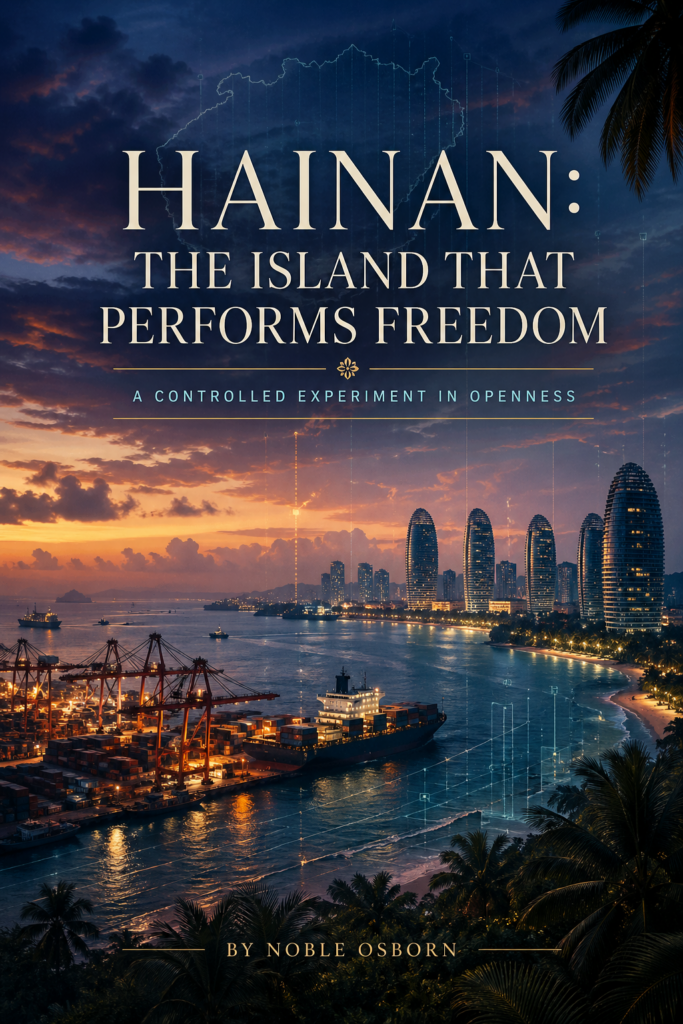
It has been fastened to the mainland with intention, engineered into place not by tides or history alone, but by policy, design, and a particular vision of what an island can be made to do. From a distance, it appears to shimmer with promise—palm-lined coasts, expanding ports, the language of openness spoken fluently in trade zones and investment corridors. But the closer one looks, the more the island begins to feel like a stage set for something else entirely.
Not freedom, exactly.
Something that looks like it.
China’s designation of Hainan as a Free Trade Port is often described in the language of liberation—lower tariffs, freer movement of goods, incentives for foreign capital, a loosening of the rigid structures that define the mainland economy. It is, on paper, an island allowed to breathe differently. A place where the rules bend, where global flows are invited to pass through with fewer interruptions.
But Hainan does not escape the system that created it. It refines it.
The island operates less as an exception and more as a demonstration. It shows what controlled openness can look like when it is carefully contained. Every easing of restriction is paired with an architecture of oversight. Every invitation outward is matched by a reinforcement inward. It is not a rupture from the mainland’s logic of governance, but an extension of it—polished, coastal, and outward-facing.
Hainan is not outside.
It is what outside has been made to resemble.
There is something deeply island-like in this arrangement, even as it resists the romantic language we often use for islands. Traditionally, islands carry with them a sense of removal—of distance from the centers of power, of cultures shaped by isolation, of identities that emerge in negotiation with the sea rather than the state.
Hainan reverses this instinct.
It is not distant from power. It is saturated with it.
Here, sovereignty does not recede at the shoreline; it intensifies. The island becomes a testing ground where governance is not loosened but recalibrated. It is a place where control learns to move more fluidly, where it adapts itself to the demands of global visibility. Where it dresses itself in the language of access.
In this way, Hainan begins to echo one of the quieter tensions at the heart of this issue: the difference between care and control.
A mother protects.
A state administers.
And sometimes, the line between the two is drawn so carefully that it becomes difficult to tell where one ends and the other begins.
The Free Trade Port can be read, if one is inclined, as a form of economic caretaking—a way of nurturing growth, attracting opportunity, creating conditions under which prosperity might take root. It promises circulation, exchange, movement. It promises that the island will not be left behind.
But care, when it is absolute, begins to resemble containment.
The island is allowed to open, but only in the ways that have been anticipated. It is allowed to welcome the world, but within boundaries that remain largely invisible to those passing through. The architecture of restriction does not disappear; it becomes harder to see.
And perhaps that is the point.
Hainan does not announce its limits. It does not need to. They are built into the structure of the place—in the systems that monitor, in the policies that guide, in the quiet understanding that the experiment has parameters even when they are not spoken aloud.
It is an island of thresholds.
Goods may pass. Capital may pass. People may pass.
But always through gates that know exactly where they stand.
There is a kind of elegance to this, if one is willing to admit it. A precision in the way openness is curated, in the way the global is invited in without surrendering the authority that governs it. Hainan is not chaotic. It is not uncertain. It is, in many ways, remarkably coherent.
And yet the coherence is what unsettles.
Because what is being rehearsed here is not simply economic reform. It is a model of how power might evolve—how it might learn to appear permeable while remaining intact. How it might inhabit the language of freedom without relinquishing its structure.
The island becomes a performance, but not a hollow one.
It is convincing.
Tourists arrive to beaches and resorts that feel indistinguishable from any other tropical destination. Investors encounter streamlined systems designed to reduce friction. The rhetoric of openness circulates easily, repeated often enough that it begins to sound like truth.
And perhaps, in part, it is.
But truth on an island like this is always layered. It exists in what is visible and what is withheld, in what moves freely and what does not, in what is permitted to feel natural and what remains carefully arranged.
Hainan does not ask to be believed.
It asks to be experienced.
And in that experience, the boundaries—those invisible lines that define the island’s real function—fade just enough to be overlooked.
Until one begins to look for them.
At the edge of the port, ships move in and out with practiced ease, their routes mapped long before they arrive. The water offers no resistance. It never does. It receives everything without question, carrying goods and people across distances that feel, from its surface, entirely open.
But the openness of water is not the same as the openness of land.
On land, every crossing is accounted for.
Every freedom is measured.
Hainan stands at that intersection—between the illusion of the sea and the reality of the state. Between what appears to move without limit and what is, in fact, carefully held in place.
It is an island that performs freedom beautifully.
And like all performances, it asks us to consider not only what we are seeing, but what has been arranged just beyond the edge of the stage.
There are islands that are built.
And there are islands that remember.
Hawaii remembers.
Not always loudly. Not always in ways that make themselves legible to the millions who arrive each year in search of something softer—sunlight, surf, the promise of distance from their own lives. The beaches are generous in that way. They offer themselves easily. They have learned how to hold the weight of arrival without protest.
But memory does not disappear simply because it is quiet.
It settles.
It moves beneath the surface like a current that does not announce itself, shaping everything it touches long before it is seen.
Hawaii, as it exists now, is often described in the language of belonging—America’s fiftieth state, a place folded neatly into the national narrative, its difference softened into something consumable. It is marketed as paradise, and the word has been repeated so often that it begins to feel like a fact rather than a construction.
But paradise, like sovereignty, depends on who is doing the naming.
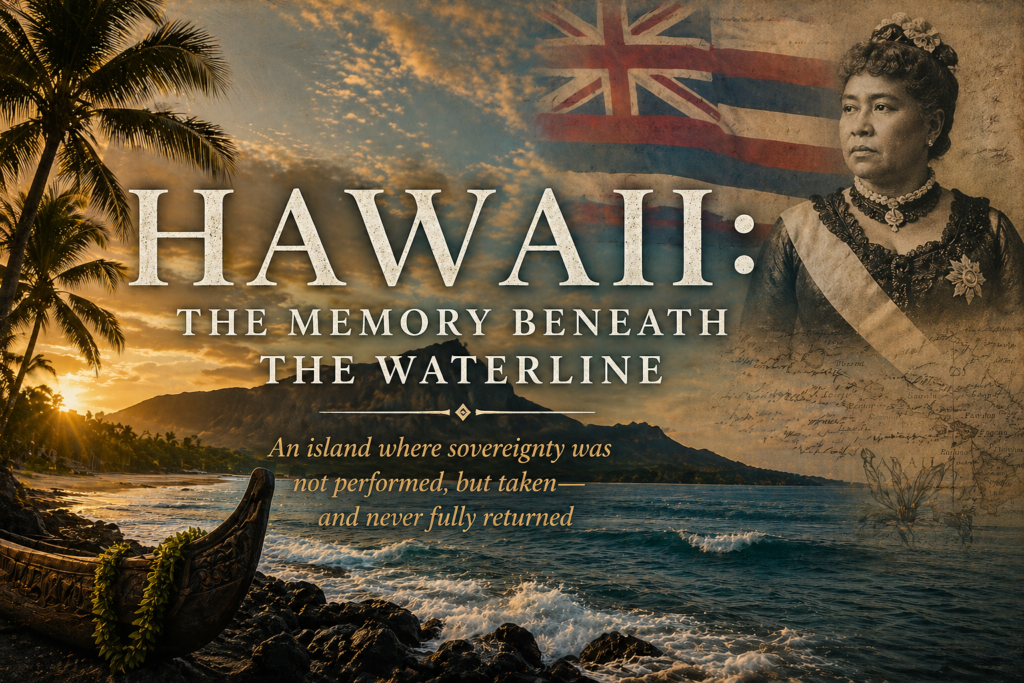
Before it was a destination, Hawaii was a kingdom.
Before it was absorbed, it governed itself.
And before the language of statehood settled over the islands, there was a moment—brief, decisive—when that sovereignty was interrupted. The overthrow of Queen Liliʻuokalani did not arrive as spectacle. It came through pressure, through alignment of economic and military interests, through the quiet certainty that power, once applied, would not be reversed.
It wasn’t staged as performance.
It was enacted.
The difference matters.
Because where Hainan offers a vision of control that is carefully arranged, Hawaii carries the residue of control that was imposed and then normalized. There is no need here to perform openness. The structure has already been set. The terms have already been written.
Statehood did not erase what came before it.
It reframed it.
In 1959, when Hawaii became part of the United States, the language was one of inclusion—of entry, of recognition, of joining something larger. But inclusion, when it follows dispossession, carries its own tension. It asks the past to remain present only in ways that do not disrupt the present.
And Hawaii does not comply so easily.
The memory of the kingdom persists—not only in formal movements for sovereignty, but in quieter gestures: in language, in land practices, in the way certain places are spoken of not as property, but as inheritance. The islands continue to hold a sense of themselves that exists alongside, and sometimes in quiet resistance to, the framework imposed upon them.
This is where the issue’s central tension begins to deepen.
Care and control do not arrive here dressed in the same language.
The United States presents its relationship to Hawaii as one of protection, of governance, of mutual belonging. Infrastructure is built. Systems are maintained. The islands are integrated into the broader mechanisms of the state. There is, undeniably, a form of care in this arrangement.
But care, when it is inseparable from control, becomes difficult to name.
The land is regulated. The economy is shaped heavily by tourism and external investment. The cost of living rises in ways that make it increasingly difficult for native populations to remain rooted in place. The islands are sustained, but also strained—held within a system that provides and extracts in equal measure.
Hawaii is not isolated.
It is entangled.
And like all entanglements, it resists simple interpretation.
For those who visit, the boundaries are nearly invisible. The experience of Hawaii is designed to feel seamless. One arrives, one moves, one consumes, one leaves. The ocean appears open, the land welcoming, the culture present but curated. It is easy, in this arrangement, to mistake access for understanding.
But access is not the same as belonging.
And the boundaries—those quiet lines that define who holds power, who carries memory, who remains—are still there.
They exist in land ownership patterns that trace back to moments of transfer and loss. In debates over sacred sites and development. In the persistent call from native Hawaiian communities for recognition that goes beyond symbolism.
Hawaii does not perform its boundaries the way Hainan does.
It lives with them.
They are embedded in the landscape, in the politics, in the daily reality of what it means to exist on land that has been both home and object. They do not need to be hidden, because they have already been accepted—at least by those who benefit from their presence.
But acceptance is not the same as resolution.
There is, beneath everything, a question that does not disappear:
What does sovereignty look like once it has been taken?
Not promised.
Not performed.
Taken.
Hawaii does not offer an easy answer. It does not resolve itself into a single narrative. It exists instead in layers—of history, of identity, of competing claims to belonging. It is both fully part of the United States and, simultaneously, something that exceeds that definition.
An island within a nation.
A nation within an island.
And always, the water.
It moves without regard for borders, touching every shore equally, erasing lines even as the land insists on them. It carries memory differently—less concerned with ownership, more attuned to continuity. It does not forget, but neither does it fix things in place.
Standing at the edge of it, one begins to understand the difference between what is held and what is free.
Hawaii has been held.
Carefully. Completely. Permanently, in the language of law.
But freedom, like the ocean, resists that kind of containment.
It remains just beyond the visible boundary—present, insistent, and impossible to fully bring to shore.
-By Noble Osborn
There are islands that are taken.
There are islands that are absorbed.
And then there are islands that are administered.
Guam is administered.
It does not announce itself the way Hawaii does, with beaches that have learned to hold memory beneath their surface. It does not perform openness the way Hainan does, carefully staging its relationship to the world. Guam exists in a quieter register—less visible, less narrated, and for that reason, more easily misunderstood.
It is, on paper, part of the United States.
Its residents are American citizens. They carry passports, serve in the military, participate in the rituals of national identity that define belonging. The flag is present. The language is familiar. The structures of governance appear, at a glance, to mirror those of the mainland.
But citizenship, here, arrives with conditions.
It is granted, but not fully extended.
Guam is classified as an unincorporated territory—a phrase that feels administrative, almost benign, until one begins to sit with what it means. The Constitution does not fully apply. Federal law governs, but representation does not follow in equal measure. The island elects a delegate to Congress, but that delegate cannot vote on final legislation. Its residents cannot vote in presidential elections.
They belong.
But not entirely.
This is not the absence of sovereignty in the dramatic sense—no single moment of overthrow defines Guam’s place in the American system. Instead, it is a slower arrangement, one built through legal frameworks and court decisions, through doctrines that have outlasted the moments that produced them.
It is governance by classification.
A sorting of places into categories that determine how much voice they are permitted to carry.
And like all such systems, it has learned how to present itself as reasonable.
The language surrounding Guam is careful. It speaks of strategic importance, of partnership, of mutual benefit. The island sits at a critical point in the Pacific, its geography shaping its political reality. Military presence is not incidental here—it is foundational. Guam is often described as a forward position, a place from which power can be projected outward.
The island becomes a kind of shield.
Or perhaps more accurately, a platform.
And platforms are not designed to speak for themselves.
This is where the tension of care and control returns, but in a different form than we have seen before.
The United States provides infrastructure, security, economic support. It maintains the systems that allow the island to function within a broader national framework. There is, undeniably, a structure of care embedded in this relationship.
But care, when it is paired with limitation, begins to narrow.
Guam is sustained, but also constrained. Its political future—whether statehood, independence, or free association—remains unresolved, not because it has not been considered, but because the mechanisms for change are themselves bound to the system that limits it.
Choice exists.
But it does not move easily.
This is what makes Guam distinct within the landscape of islands in this issue. It is not performing autonomy, nor is it holding onto a memory of lost sovereignty in the same visible way as Hawaii. It is living within a present that has been carefully defined, where the boundaries are not hidden so much as normalized.
They are written into law.
And law, once established, has a way of disappearing into the background of daily life. It becomes structure. It becomes expectation. It becomes the thing that does not need to be questioned because it has always been there.
But of course, it has not always been there.
The history of Guam—like so many islands—includes colonization, transfer, war, and strategic occupation. Spain, the United States, Japan during World War II, and then again the United States. Each layer left its imprint, reshaping the island’s relationship to power, to identity, to self-determination.
What remains now is not a single narrative, but an accumulation.
And within that accumulation, a question persists:
What does it mean to belong to a nation that does not fully include you?
This is not an abstract question on Guam. It is lived—in elections that do not quite reach, in representation that stops just short, in the knowledge that decisions made elsewhere carry consequences that cannot be directly shaped.
It is a form of proximity to power without participation in it.
And like all such proximities, it creates a particular kind of tension—less visible than resistance, less dramatic than protest, but no less real.
Guam does not sit at the edge of the system.
It sits inside it.
And that may be the most difficult position of all.
Because inside, the boundaries are harder to name.
They are not marked by distance or difference. They are embedded in familiarity—in the shared language, the shared symbols, the shared claims of identity. They require a different kind of awareness to see, a willingness to look at what appears whole and ask where it is not.
The island does not resist through spectacle.
It endures through recognition.
Through the quiet understanding that citizenship, as it exists here, is incomplete. That sovereignty, as it is discussed, remains deferred. That the structures of governance, however stable they appear, are still built on distinctions that have never fully been resolved.
And always, the ocean.
It surrounds Guam the way it surrounds every island—indifferent to law, untouched by classification, moving freely in ways that land cannot. It offers a different model of connection, one not based on hierarchy or designation, but on continuity.
From the shoreline, the horizon looks the same in every direction.
Open.
Unclaimed.
But the reality of the island tells a different story.
Guam is held not by visible force, but by invisible definitions.
And those definitions—quiet, persistent, and deeply embedded—shape the limits of what the island is allowed to become.
There are islands that are governed from afar.
And there are islands that are told they are not afar at all.
Réunion is France.
Not metaphorically. Not symbolically. Not in the softened language of partnership or territory. It is, in the strictest legal sense, part of the French Republic—an overseas department, fully integrated into the constitutional structure of the state. The laws that pass in Paris apply here. The currency is the euro. The institutions mirror those of the mainland.
On paper, there is no distance.
But paper has its limits.
Geographically, Réunion sits in the Indian Ocean, thousands of miles from Europe, closer to Madagascar than to Marseille, shaped by currents, climates, and histories that have little to do with the continent that governs it. Its landscape is volcanic, lush, edged by reef and sea. Its population carries the imprint of multiple migrations—African, Indian, Chinese, European—layered into a culture that is neither singular nor easily categorized.
And yet, it is called France.
This is not the conditional belonging of Guam, where citizenship stops just short of full participation. Nor is it the remembered sovereignty of Hawaii, where the past presses against the present. Réunion represents something else entirely: a form of incorporation so complete that the distinction between island and mainland is meant to disappear.
The island is not outside the state.
It is the state.
At least, that is the assertion.
There is a certain elegance in this model. No need for the careful staging of openness that defines Hainan. No need for the unresolved political status of Guam. No need to reconcile a narrative of annexation with one of statehood, as in Hawaii. Réunion bypasses these tensions by declaring them irrelevant.
You are not a territory.
You are France.
But declarations do not erase material realities.
The island’s economy remains heavily dependent on transfers from the mainland. Employment opportunities are uneven. Youth unemployment persists at levels that would be politically untenable in continental France. The cost of living is high, shaped by import dependency and geographic isolation. The rhythms of daily life are influenced as much by distance as by policy.
Integration, here, does not eliminate inequality.
It reorganizes it.
This is where the question of care becomes more complicated.
France invests in Réunion. It funds infrastructure, education, healthcare. It extends the welfare state across the ocean, ensuring that the island benefits from the protections and services that define the Republic. There is, undeniably, a framework of support—one that distinguishes Réunion from many other island territories around the world.
It is not neglected.
It is maintained.
But maintenance is not the same as autonomy.
The laws that shape the island’s future are largely written elsewhere. The economic structures that sustain it are tied to decisions made in a different hemisphere. The identity that defines it—French—is both real and imposed, embraced and questioned, lived and complicated.
Réunion does not resist this identity outright.
It absorbs it.
And in that absorption, something subtle occurs.
Difference becomes administrative rather than political. Culture is expressed, but within boundaries that do not threaten the larger structure. Language shifts, accents persist, traditions endure—but they exist alongside a dominant framework that remains unquestioned in its authority.
The island becomes a variation, not an exception.
And variations, by design, do not alter the whole.
This is what makes Réunion the European version of the condition we have been tracing. It demonstrates how power can extend itself not through overt control or visible limitation, but through incorporation so thorough that it begins to feel natural.
The boundaries are still there.
They are simply harder to name.
They exist in the distance that cannot be legislated away—in the fact that decisions travel across oceans before they arrive. In the economic dependencies that tie the island to the mainland in ways that limit its capacity to redefine itself. In the quiet awareness that, despite full citizenship, the center of gravity remains elsewhere.
Réunion is included.
But it is not central.
And that distinction—subtle, persistent—is where the tension lives.
It is tempting to read Réunion as a success story. A model of integration that avoids the instability of partial sovereignty, the ambiguity of territorial status, the conflict of unresolved independence movements. It offers stability, access, and the full extension of state services.
But stability can conceal as much as it reveals.
Because beneath the surface, the same question emerges, reshaped but not resolved:
What does it mean to belong completely to a place that is not where you are?
The island answers in fragments.
In the coexistence of multiple identities. In the negotiation between local culture and national structure. In the lived experience of being both fully French and unmistakably something else.
And always, the ocean.
It stretches between Réunion and the mainland, indifferent to legal definitions, reminding anyone who stands at its edge that distance is not erased by decree. It is felt—in time, in cost, in movement, in the subtle ways separation insists on itself.
The law may say the island is not far.
But the water knows otherwise.
And it is in that space—between what is declared and what is lived—that Réunion reveals its truth: not as an exception, but as a refinement of a larger pattern.
An island where belonging has been formalized so completely that questioning it feels almost unnecessary.
Almost.
Power, when it is described, is often given a shape.
It is vertical. It is decisive. It is singular.
It moves in lines—downward, outward, imposed.
But there are other ways to understand it.
On islands, especially, power rarely has the luxury of abstraction. It is lived in proximity. It is negotiated in smaller spaces, where decisions travel quickly and consequences arrive without delay. It is shaped not only by institutions, but by relationships—by care, by memory, by the daily work of keeping something fragile intact.
And increasingly, it is carried by women.
Not as an anomaly.
Not as a symbolic breakthrough.
But as a shift that is already underway.
Across island nations and territories, women have stepped into leadership roles that ask something different of power. Not softer, exactly. Not less decisive. But more aware of what must be sustained, not just what can be controlled.
This is not a universal truth. Power resists transformation, even when its representatives change. But there is a pattern emerging—subtle, uneven, and worth paying attention to.
In Iceland, leadership has taken on a form that feels almost disarming in its normalcy. A woman as president. A woman as prime minister. Women leading across party lines. It is not presented as revolution. It is presented as governance.
And that may be the more radical gesture.
Because when representation becomes ordinary, it stops asking permission.
It simply exists.
But Iceland is not an island of uncertainty in the way others are. Its sovereignty is intact. Its systems are stable. The question there is not whether women can lead, but how leadership itself might change when it is no longer filtered through a single historical lens.
Elsewhere, the stakes are different.
In the Marshall Islands, Hilda Heine has been called the “mother of the nation.” The phrase carries weight—part reverence, part expectation. It asks not only that she govern, but that she protect.
And protection, in a place already negotiating rising seas and the long shadow of nuclear testing, is not metaphorical.
It is immediate.
Here, leadership is inseparable from survival.
Decisions about policy are also decisions about land, about continuity, about whether a future can be held in place long enough to be lived. The role of a leader expands—not because it is granted more power, but because the margins for error are smaller.
Care becomes structural.
In Dominica, Sylvanie Burton carries a different kind of weight. As the first woman—and the first indigenous Kalinago leader—to hold the presidency, her presence alone alters the frame.
Representation here is not abstract.
It is historical correction.
But even correction has its limits. The systems she inhabits were not built with her in mind. They require navigation, adaptation, compromise. Leadership becomes not just an act of direction, but of translation—between past exclusion and present expectation.
In Japan, Sanae Takaichi represents something more complicated. A breakthrough, certainly—the first woman to hold the office. But breakthroughs do not always carry transformation with them.
Power can change hands without changing form.
Her leadership exists within structures that remain deeply conservative, where gender equality lags behind economic and political development. The presence of a woman at the top does not dissolve those contradictions. It reveals them.
And in revealing them, it asks a harder question:
What does it mean to enter power without reshaping it?
Not all leadership resists.
Some of it reinforces.
In Taiwan, Tsai Ing-wen offered another model—one where governance and identity were intertwined. Her presidency navigated not only domestic reform, but the constant pressure of external definition.
To lead Taiwan is to exist in a state of negotiation—between recognition and denial, between autonomy and threat.
Her leadership did not resolve that tension.
It held it.
And sometimes, holding is the work.
Further south, in Fiji, women are shaping power in ways that are less visible but no less consequential. Not always at the very top, but within the structures that determine how communities respond to climate, to economy, to change.
Here, leadership is often collective.
It emerges through action rather than title—through organizing, through adaptation, through the rebuilding of systems that must function even as the ground shifts beneath them.
Power disperses.
It becomes something that can be shared.
And this may be the quietest transformation of all.
Because the question at the center of this issue—care versus control—does not resolve cleanly. Women in power are not inherently more caring, nor less capable of control. The binary itself begins to break down under closer inspection.
What changes, instead, is the frame.
Care is no longer relegated to the private sphere. It enters policy, infrastructure, climate response. It becomes visible as a form of governance rather than a supplement to it. Control, in turn, is sometimes softened, sometimes reasserted, sometimes simply made more legible.
The relationship between the two becomes fluid.
And islands, perhaps more than anywhere else, reveal this fluidity clearly.
Because on an island, everything is closer.
The distance between decision and consequence is shorter. The illusion of abstraction collapses more quickly. Leadership cannot drift too far from the lives it affects without becoming immediately visible as failure.
There is no mainland to disappear into.
Only the shoreline.
And always, the sea.
It surrounds these leaders the same way it surrounds the systems they inhabit—constant, shifting, impossible to ignore. It reminds them, whether they wish it or not, that stability is temporary, that control is partial, that care is not optional.
To govern an island is to understand this.
To lead one is to live inside it.
And increasingly, the hands on the wheel belong to women who are not simply inheriting power, but redefining the terms under which it is exercised.
Not loudly.
Not uniformly.
But persistently enough that the shape of leadership itself begins, slowly, to change.
-By Noble Osborn
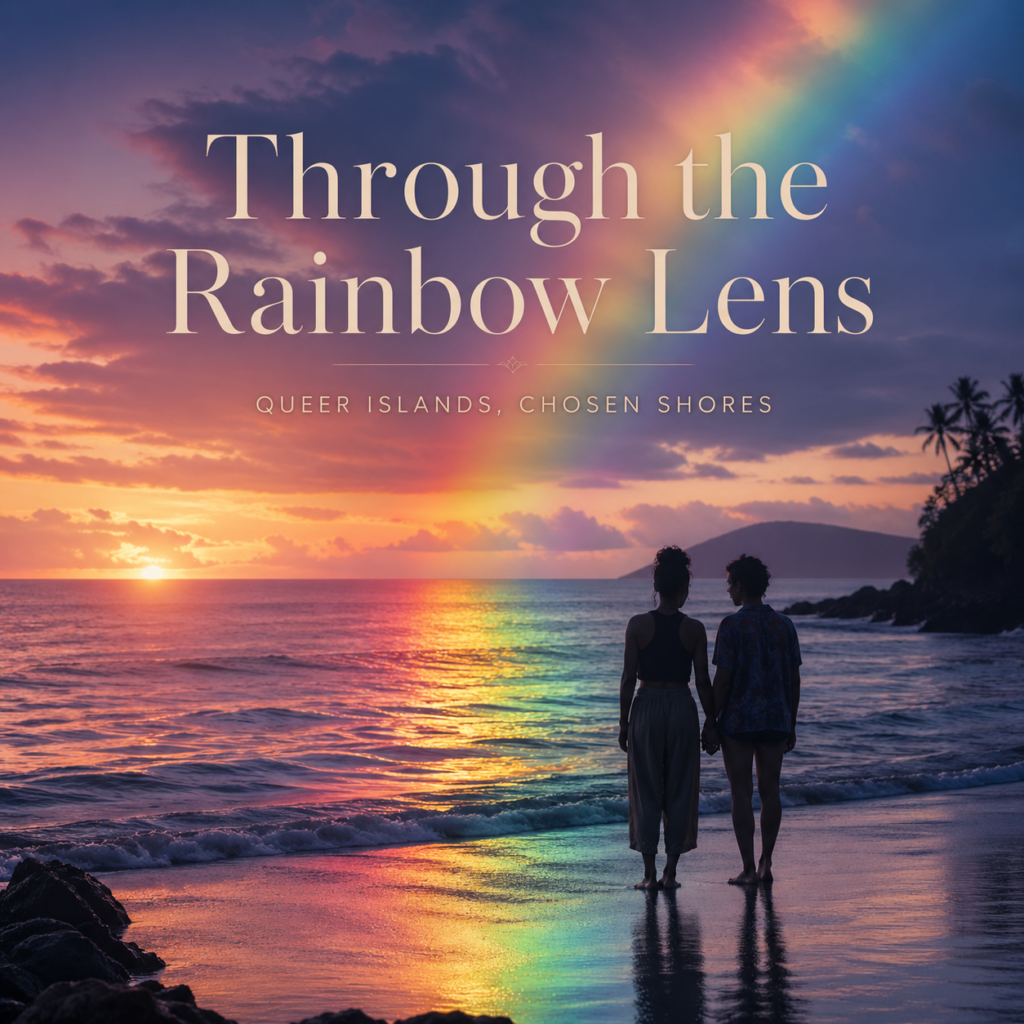
There are islands where belonging is inherited.
And there are islands where belonging must be made.
For queer people, this distinction matters.
Family, nation, church, culture, law—each can offer shelter. Each can also become a shoreline that refuses entry. Across island societies, where community memory is close and privacy can be difficult to protect, queer life often develops in the tension between visibility and safety, between deep attachment to place and the knowledge that place does not always return that love gently.
An island can hold you.
It can also watch you.
That is the paradox.
In this issue, we have followed islands as experiments, memories, territories, departments, nations. We have asked what sovereignty means when power arrives from elsewhere, when law travels across oceans, when citizenship is granted but limited, when identity is absorbed into a larger national story.
Through the Rainbow Lens asks a more intimate version of that same question:
What does sovereignty mean inside the self?
For LGBTQ people, sovereignty is not only a matter of flags and borders. It can mean the right to name oneself. The right to love without translation. The right to remain in one’s home without having to shrink into acceptability. The right to inherit not only land, language, and family, but future.
On islands, these questions sharpen.
The sea creates enclosure, but also connection. It protects and exposes. It makes escape imaginable and return complicated. A queer person leaving an island may be described as ambitious, modern, free—but departure can also carry grief. To leave is not always liberation. Sometimes it is exile with better lighting.
And to stay is not always surrender.
Sometimes staying is the most radical act.
There are queer island lives lived in careful codes: a cousin everyone understands but no one names; a friendship that outlasts marriages; a Sunday shirt chosen with precision; a dance floor where bodies become briefly ungoverned; a lover introduced as a roommate; a mother who says nothing and leaves food on the table anyway.
These are not small things.
They are survival practices.
They are forms of nation-building at the scale of the body.
In island cultures shaped by colonial law, missionary inheritance, tourism, militarization, migration, and climate precarity, queerness is often treated as an imported disruption. But this is one of empire’s oldest lies: that difference arrives from outside, while repression is native.
The truth is more complicated.
Queer people have always been present. In families. In ceremonies. In labor. In art. In the margins of photographs. In the silence between official records. What often arrived from outside was not queerness, but the machinery built to punish it.
This matters.
Because when queer life is framed as foreign, belonging becomes conditional. The queer islander is asked to choose between identity and home, as if love of place must require self-erasure. As if culture is so fragile that it can only survive by narrowing the definition of who counts.
But cultures are not preserved by fear.
They are preserved by people who continue to live inside them.
All of them.
This is where the issue’s larger theme—Daughters of the Sea, Mothers of Nations—opens another door. Motherhood, in these pages, is not only biological. It is care. It is continuity. It is the act of making survival possible for someone who comes after you.
Queer communities know this kind of motherhood well.
Chosen mothers. Ballroom mothers. Aunties who are not aunties. Elders who teach without announcing that they are teaching. Friends who become kin because kinship, like sovereignty, is sometimes built when inheritance fails.
These forms of care are not lesser because they are chosen.
They may be more deliberate.
A nation can be imagined through blood, territory, and law. But it can also be imagined through who is fed, who is defended, who is mourned properly, who is allowed to return.
Through the Rainbow Lens insists that queer people are not outside the island story.
They are part of its shoreline.
They know what it means to live at the edge of recognition. They know what it means to carry multiple names for the same self. They know that belonging is often negotiated in glances, in rooms, in timing, in the careful reading of weather.
And they know something else, too:
That survival is not the same as silence.
The queer island future is not merely one of tolerance. Tolerance is too thin a word for people who have helped sustain families, cultures, economies, art, ritual, and memory while being asked to remain grateful for partial acceptance.
The future must be fuller than that.
It must allow queer islanders to be visible without being made into symbols, rooted without being trapped, modern without being accused of betrayal, traditional without being forced into narrow roles.
It must allow them to belong without footnotes.
Because the island is not weakened by their presence.
It is made more honest.
And perhaps that is the deeper sovereignty: not the fantasy of purity, but the courage to claim the whole truth of a people. The daughters, the sons, the children who are neither. The mothers by birth and the mothers by devotion. The ones who left. The ones who stayed. The ones who came home changed and found the sea still speaking their name.
An island is never only land surrounded by water.
It is memory surrounded by pressure.
And queer life, like the tide, has always known how to return.
–By Noble Osborn
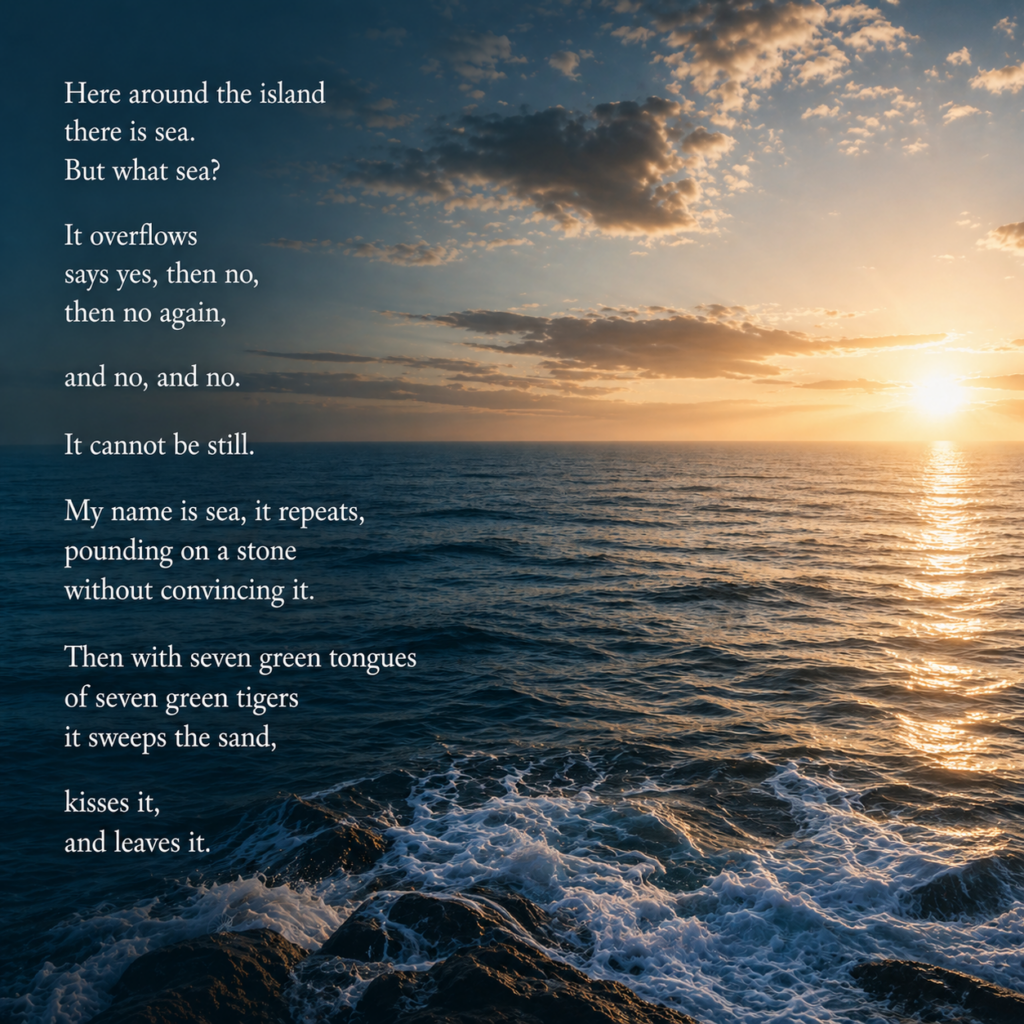
Excerpt from Ode to the Sea by Pablo Neruda
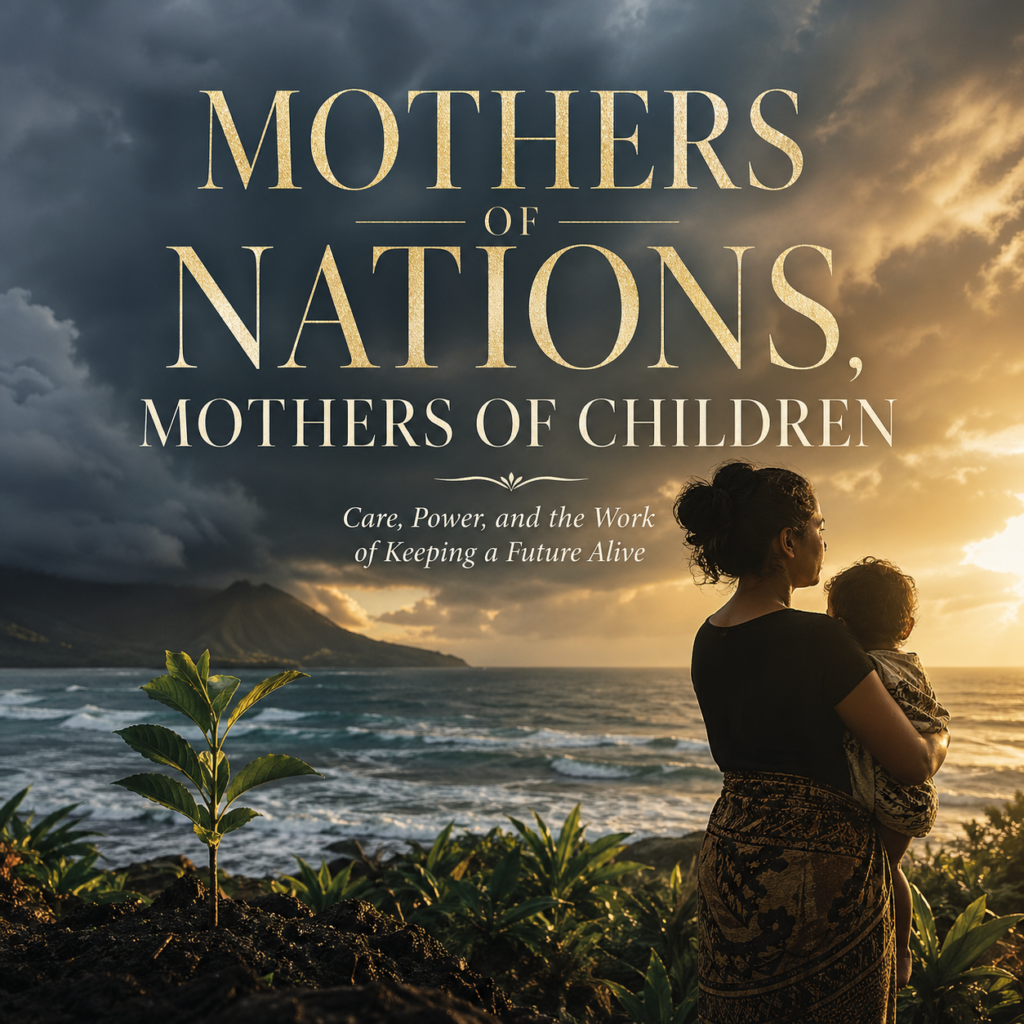
There is a kind of labor that history rarely names correctly.
It calls it instinct.
It calls it duty.
It calls it woman’s work, community work, domestic work, background work—the soft machinery that keeps the world from collapsing while official power congratulates itself for endurance.
But on islands, especially, that labor becomes harder to ignore.
Because islands reveal dependence.
They do not allow the fantasy that anyone survives alone. Food, water, shelter, medicine, memory, language, kinship, evacuation routes, burial grounds, coastlines, fisheries, schools, storms—all of it is connected. All of it is vulnerable. All of it must be tended.
And so the mother becomes more than a figure.
She becomes a political category.
Not only the woman who bears a child, though that remains sacred in its own right. Not only the woman who feeds, nurses, teaches, grieves, protects. But the one who understands that survival is not abstract. That a nation is not kept alive by anthem or border alone, but by the ordinary and repeated acts that make tomorrow possible.
This is the work beneath sovereignty.
Before a nation declares itself, someone has to keep its children fed.
Before a flag is raised, someone has to remember the language.
Before a coast is defended, someone has to know which shoreline is sacred, which reef is dying, which road floods first, which elder cannot walk quickly enough when the warnings come.
The mother knows.
Or rather, the mothers know.
And in island nations, where climate change has made the future feel less like an inheritance than a negotiation, this knowledge becomes governance by another name.
The world often speaks of islands as fragile.
Small islands. Vulnerable islands. Low-lying islands. Remote islands. Vanishing islands.
The language is not entirely wrong, but it is incomplete.
Fragility is not the same as weakness.
What is fragile may also be precious. What is vulnerable may also be wise. What is exposed may understand danger long before the powerful admit it exists.
Island mothers have always lived with this kind of knowledge.
They know how quickly abundance can turn. How a storm can make a familiar place unrecognizable. How a fishing ground can thin. How prices rise when everything must be shipped across water. How migration begins not always with ambition, but with necessity. How children learn to leave before they learn to stay.
This is one of the quietest griefs of island life:
To love a place and prepare your children to survive beyond it.
That, too, is motherhood.
Not the sentimental version.
The harder one.
The one that packs documents in waterproof bags. The one that sends money home. The one that teaches a child the songs of a place they may someday know more through memory than through residence. The one that understands that continuity sometimes travels in bodies when land itself is threatened.
And still, mothers plant.
They plant trees in the Philippines after typhoons. They restore wetlands in Fiji through the revival of old crafts and communal labor. They preserve seeds, recipes, rituals, and names. They organize care when formal systems lag. They stretch food, time, patience, and political imagination.
They do not call this nation-building.
But it is.
A nation is not only its government.
It is the accumulated evidence that people have chosen, again and again, to care for one another in a particular place.
This is why the language of motherhood belongs in an issue about sovereignty. Not because women are naturally gentle. Not because mothers are morally pure. Not because care should be romanticized until it becomes another burden placed on those already carrying too much.
But because care is one of the oldest forms of power.
And one of the most exploited.
States have always borrowed the language of motherhood when convenient. Motherland. Mother country. Mothers of the nation. The rhetoric is warm, but the structure behind it is often extractive. Women are asked to symbolize continuity while being denied authority over the conditions of that continuity.
They are praised for sacrifice.
Then left to absorb the costs.
This is the danger.
When a nation calls women mothers but refuses them power, it turns care into a cage.
When it celebrates resilience without changing the conditions that require it, resilience becomes another word for abandonment.
Island women know this contradiction intimately.
They are asked to keep families whole while economies fracture. To preserve culture while development consumes land. To adapt to climate change they did not cause. To hold communities together under systems built elsewhere, for interests that often arrive by ship, by treaty, by investment agreement, by military plan, by tourist brochure.
They are expected to be endlessly resourceful.
But resourcefulness is not justice.
The mother of a nation should not have to become a miracle worker because power failed to plan.
And yet, everywhere in this issue, we see women doing precisely that impossible work.
In Fiji, women’s hands restore wetlands while also restoring livelihood. The craft is not merely decorative. It becomes ecological memory, economic survival, and cultural continuation at once.
In Madagascar, women trained in renewable energy carry light into communities where infrastructure has failed to reach. Their work challenges the old division between domestic labor and technical expertise. They do not only use energy. They install it. Maintain it. Teach it. Spread it.
In Cuba, women stand in the pressure of scarcity, turning daily endurance into political witness. They know that embargoes and sanctions are never only diplomatic instruments. They enter kitchens. Hospitals. Bus stops. Medicine cabinets. Children’s bodies.
In Mauritius, women leaders speak plainly about the gendered cost of climate change: income lost quickly, unpaid care expanded, safety made more fragile. But they also insist on participation, on decision-making, on the fact that women are not merely victims of crisis. They are designers of response.
This distinction matters.
Pity is not power.
Visibility is not enough.
A woman standing in floodwater with a child on her hip may become an image the world briefly mourns. But if she is not also invited into the room where adaptation plans are written, the image becomes another kind of extraction.
Her suffering is witnessed.
Her knowledge is ignored.
The mother of nations must be more than symbol.
She must be policymaker, negotiator, scientist, farmer, fisher, teacher, engineer, artist, president, minister, keeper of archives, keeper of shorelines, keeper of names.
She must be allowed to be angry.
This, too, matters.
Because motherhood is too often flattened into tenderness. But any honest mother knows tenderness has teeth. Care is not passive. To protect what one loves is to stand against what threatens it.
There is fury in care.
There is refusal in feeding.
There is rebellion in saying: my child will have a future.
For island nations facing rising seas, that sentence becomes almost revolutionary.
My child will have a future.
My language will have a future.
My people will have a future.
My island will not be reduced to a warning label in someone else’s climate report.
This is the heart of the matter.
The world has treated islands as early casualties, as symbols of what is coming, as beautiful places already half-transformed into elegy. But islands are not metaphors waiting to be mourned. They are homes. They are nations. They are graves and gardens, ports and playgrounds, temples and markets, reefs and roads.
They are places where mothers call children in from the water.
Where grandmothers remember storms by name.
Where aunties know who needs feeding.
Where queer children build chosen kinship at the edge of recognition.
Where women govern not because power has finally become generous, but because survival has always required their intelligence.
To call them mothers of nations is not to soften them.
It is to recognize the scale of what they have been carrying.
And perhaps, after all these essays on governance and control, this is the corrective we need.
Power is not only the ability to define borders.
It is the ability to keep life possible within them.
Power is not only law.
It is water stored before the storm.
It is a child taught the old word for breadfruit.
It is a wetland restored.
It is a solar panel installed on a roof no one from the capital remembered.
It is a woman standing before a parliament, a village council, a classroom, a shoreline, and insisting that the future is not an abstraction.
It has a face.
It has a hunger.
It has a name.
And it is waiting to be cared for.
–By Noble Osborn
Reflections in Verse
“What the Water Keeps”
The islands do not end
where the maps say they do.
They continue—
in salt carried inland on skin,
in stories told after the wind dies down,
in names spoken softly
so they are not lost to the next storm.
We called them small,
as if scale were the measure of worth,
as if a shoreline could be diminished
because it could be walked in a day.
But stand long enough
where land gives itself to water
and you begin to understand—
nothing here is small.
Not the grief
of a mother folding documents into plastic
while the radio names another storm.
Not the patience
of a woman planting something
she may never see grow tall.
Not the quiet architecture
of hands that mend nets,
carry water,
teach children the old words
before the new ones arrive and overwrite them.
We have watched power
dress itself in distance—
in capitals far from tide,
in laws that cross oceans without tasting them,
in flags that forget
what it means to be held by wind.
But here,
power is closer.
It looks like a shoreline restored
one handful at a time.
It sounds like a name
pronounced correctly
after years of being bent.
It moves like women
who do not wait to be asked
before they begin the work.
And the sea—
always the sea.
It does not remember borders.
It does not honor ownership.
It does not keep still long enough
to be claimed.
It arrives,
and arrives again,
and arrives again,
asking the same question
in a different language each time:
What will you carry forward?
What will you leave behind?
The islands answer
not in declarations
but in continuance—
in children who learn
how to stand where the ground shifts,
in mothers who teach them
that love is not the absence of leaving,
but the promise of return,
in those who go
and those who stay
and those who remake belonging
in places they were told did not belong to them.
There is no single future here.
Only many,
held together
by those who refuse
to let the thread break.
And somewhere, just beyond the visible,
where the horizon softens
and the light bends into something unnamed,
the water keeps everything
it has ever been given—
the names,
the crossings,
the voices that would not quiet,
the hands that refused to let go.
It keeps them
not as endings,
but as proof
that even at the edge of the world,
something is always
beginning again.
–By Noble Osborn